Today's
EarthStation1.com 15% Off Commemorative Memorial Title: United
Nations Documentaries Set DVD MP4 Download USB Drive
Today, October 19, 2025
October 19: World Humanitarian Action
Day: -- A day is reserved to show special appreciation and respect
to the martyrs of the humanitarian causes. The observation calls
for a mass global display of public support for humanitarian
action. When the governing bodies fail, the non-profits and
humanitarian organizations step up. But serving humanity by being
on the frontlines has severe consequences that can often turn
fatal. World Humanitarian Action Day honors the ones who died
while saving others. People from around the world are encouraged
to join humanitarian organizations such as UNICEF, Red Cross, and
others, and become active messengers of humanity. World
Humanitarian Action Day recognizes the frontline warriors who face
adversity and danger to help others in need. Some of the themes of
the past years have been 'Charter for Compassion' and 'Eradicating
Extreme Hunger.' World Humanitarian Action Day is an opportunity
to celebrate the spirit of global humanitarian initiatives and the
work of humanitarian forces around the globe. Although the appeal
for a humane world remains at the top of the agenda, the day
primarily honors the volunteers, workers, and support staff who
have sacrificed their lives to the cause. The definition of
humanitarian action is to 'maintain human dignity, alleviate
suffering, and save lives without any regard for race, gender,
ethnicity, political affiliation, or religion.' The oath of
humanitarian action serves the most vulnerable people who need
external support to return to their normal lives after surviving
the destructive impact of complex emergencies, natural disasters,
or war. World Humanitarian Action Day is followed by World
Humanitarian Day and other United Nations Affiliated holidays to
keep up the global sense of momentum charted by the members of the
group called the "Messengers of Humanity." The day calls
for some social media action, with members sharing the successes
and failures of global humanitarian aid to amplify their common
message. Humanitarians around the world deserve our praise and
support for saving millions of lives and selflessly serving
billions of people. The day also examines the boundaries of
humanitarianism and agrees that, while humanitarian aid will
always be available, it is preferable to work towards a better,
more humane society in which the need for it does not exist. On
Sale @ 15% Off Discount Till Midnight PT!
https://store.earthstation1.com/united-nations-documentaries-set-dvd-mp4-download-usb-driv4.html
Today's
EarthStation1.com 15% Off Commemorative Memorial Title: Hannibal:
The Terror Of Rome Documentary Series MP4 Video Download DVD
Today, October 19, 2025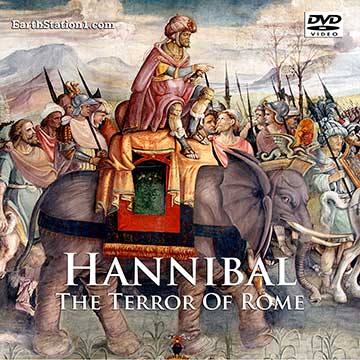
October 19, 202 BC: The Punic Wars: The
Second Punic War (The Hannibalic War): The Battle Of Zama: -- The
future and the rule of the Western World is decided when the Roman
legions under Scipio Africanus severely defeat Hannibal Barca,
leader of the army defending Carthage, in what is now Tunisia. The
Roman army of approximately 30,000 men was outnumbered by the
Carthaginians who fielded either 40,000 or 50,000; the Romans were
stronger in cavalry, but the Carthaginians had 80 war elephants.
At the outset of the Second Punic War, in 218 BC, a Carthaginian
army led by Hannibal had invaded mainland Italy, where it
campaigned for the next 16 years. In 210 BC Scipio took command of
the faltering Roman war effort in Iberia (modern Spain and
Portugal) and cleared the peninsula of Carthaginians in five
years. He returned to Rome and was appointed consul in 205 BC. The
following year his army landed near the Carthaginian port of
Utica. The Carthaginians and their Numidian allies were repeatedly
beaten in battle and the Roman ally Masinissa became the leading
Numidian ruler. Scipio and Carthage entered into peace
negotiations, while Carthage recalled armies from Italy commanded
by Hannibal and Mago Barca. The Roman Senate ratified a draft
treaty, but when Hannibal arrived from Italy, Carthage repudiated
it. Hannibal marched inland to confront the Romans and a battle
quickly ensued. The fighting opened with a charge by the
Carthaginian elephants. These were repulsed, some retreating
through the Carthaginian cavalry on each wing and disorganising
them. The Roman cavalry units on each wing took advantage to
charge their counterparts, rout them and pursue them off the
battlefield. The two armies' close-order infantry were each
deployed in three lines. The first two lines engaged each other
and after a hard-fought combat the Carthaginians were routed. The
second Carthaginian line then fanatically assaulted the Roman
first line, inflicting heavy losses and pushing it back. After the
Romans committed their second line the Carthaginians were forced
to withdraw. There was a pause, during which the Romans formed a
single extended line, to match that of the Carthaginians. These
two lines charged each other, according to the near-contemporary
historian Polybius "with the greatest fire and fury".
The fight continued for some time, neither side gaining the
advantage. The Roman cavalry then returned to the battlefield and
charged the Carthaginian line in the rear, routing and destroying
it. Carthage was left with no army with which to continue the war.
The peace treaty dictated by Rome stripped Carthage of its
overseas territories and some of its African ones. Thereafter, it
was clear that Carthage was politically subordinate to Rome. On
Sale @ 15% Off Discount Till Midnight PT!
https://store.earthstation1.com/hannibal-the-terror-of-rome-documentary-series-mp4-video-download-dv4.html
Today's
EarthStation1.com 15% Off Commemorative Memorial Title: American
Revolutionary War Documentaries DVD, Download, USB Drive
Today, October 19, 2025
October 19, 1781: The Age Of
Enlightenment (The Enlightenment, The Age Of Reason): The Age Of
Revolution: The Atlantic Revolutions: The American Enlightenment:
The American Revolution: The American Revolutionary War: The
Yorktown Campaign: The Siege Of Yorktown (The Battle Of Yorktown,
The Surrender At Yorktown): -- As their band played The World
Turned Upside Down, the British Army marched out in formation and
surrendered to the Americans at Yorktown. More than 7,000 English
and Hessian troops, led by British General Lord Charles
Cornwallis, surrendered to General George Washington and the comte
de Rochambeau. The war between Britain and its American colonies
was effectively ended. The final peace treaty was signed in Paris
on September 3, 1783. On Sale @ 15% Off Discount Till Midnight PT!
https://store.earthstation1.com/american-revolutionary-war-dvd-documentaries.html
Today's
EarthStation1.com 15% Off Commemorative Memorial Title: Napoleon
Bonaparte Documentaries Collection MP4 Video Download DVD
Today, October 19, 2025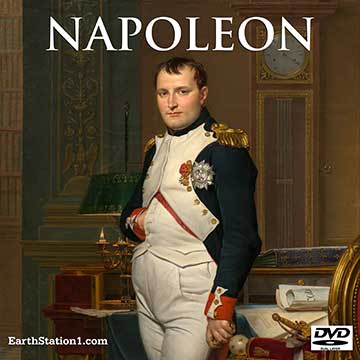
October 19, 1812: The Age Of
Enlightenment (The Enlightenment, The Age Of Reason): The Age Of
Revolution: The Atlantic Revolutions: The French Revolution: The
French Revolutionary And Napoleonic Wars (The Great French War)
(The French Revolutionary Wars, The Napoleonic Wars): The
Napoleonic Wars: The French Invasion Of Russia (The Russian
Campaign, The Patriotic War Of 1812) -- The French Invasion Of
Russia fails when Napoleon begins his retreat from Moscow. The
French invasion of Russia, also known as the Russian campaign, the
Second Polish War, the Army of Twenty nations, and the Patriotic
War of 1812 was launched by Napoleon Bonaparte to force the
Russian Empire back into the continental blockade of the United
Kingdom. Napoleon's invasion of Russia is one of the best studied
military campaigns in history and is listed among the most lethal
military operations in world history. It is characterized by the
massive toll on human life: in less than six months nearly a
million soldiers and civilians died. On 24 June 1812 and the
following days, the first wave of the multinational Grande Armee
crossed the Niemen into Russia. Through a series of long forced
marches, Napoleon pushed his army of almost half a million people
rapidly through Western Russia, now Belarus, in an attempt to
destroy the separated Russian armies of Barclay de Tolly and Pyotr
Bagration who amounted to around 180,000-220,000 at this time.
Within six weeks, Napoleon lost half of the men because of the
extreme weather conditions, disease and hunger, winning just the
Battle Of Smolensk. The Russian Army continued to retreat, under
its new Commander in Chief Mikhail Kutuzov, employing attrition
warfare against Napoleon forcing the invaders to rely on a supply
system that was incapable of feeding their large army in the
field. The fierce Battle Of Borodino, seventy miles (110 km) west
of Moscow, was a narrow French victory that resulted in a Council
at Fili. There Kutuzov decided not to defend the capital but to a
general withdrawal to save the Russian army. On 14 September,
Napoleon and his army of about 100,000 men occupied Moscow, only
to find it abandoned, and the city was soon ablaze, instigated by
its military governor. Napoleon stayed in Moscow for five weeks,
waiting for a peace offer that never came. Because of the nice
weather he left late, hoping to reach the magazines in Smolensk by
a detour. Losing the Battle of Maloyaroslavets he was forced to
take the same route as he came. In early November it began to
snow, which complicated the retreat. Lack of food and winter
clothes for the men, fodder for the horses, and guerilla warfare
from Russian peasants and Cossacks led to greater losses. Again
more than half of the men died on the roadside of exhaustion,
typhus and the harsh continental climate. The Grande Armee had
deteriorated into a disorganized mob, and the Russians could not
conclude otherwise. In the Battle of Krasnoi Napoleon was able to
avoid a complete defeat. Meanwhile, he was almost without cavalry
and artillery, and deployed the Old Guard for the first time.
Although several retreating French corps united with the main
army, when the Berezina was reached, Napoleon only had about
49,000 troops and 40,000 stragglers of little military value. On 5
December, Napoleon left the army at Smorgonie in a sledge and
returned to Paris. Within a few days, 20,000 more perished from
the bitter cold and louse-borne diseases. Murat and Ney, the new
commanders continued, leaving more than 20,000 men behind in the
hospitals of Vilnius. What was left of the main armies crossed the
frozen Niemen and the Bug disillusioned. Although estimates vary
because precise records were not kept, numbers exaggerated and
auxiliary troops not always counted, Napoleon's army entered
Russia with more than 450,000 men, more than 150,000 horses,
around 25,000 wagons and almost 1,400 pieces of artillery. Only
120,000 men survived (excluding early deserters); as many as
380,000 died in the campaign. Perhaps most importantly, Napoleon's
reputation of invincibility was shattered. On Sale @ 15% Off
Discount Till Midnight PT!
https://store.earthstation1.com/napoleon-bonaparte-documentaries-collection-mp4-video-download-dv4.html
Today's
EarthStation1.com 15% Off Commemorative Memorial Title: World War
1 TV Series With Robert Ryan DVD, Video Download, USB Drive
Today, October 19, 2025
October 19, 1914: The European Civil War:
World War I: The First European War (The European Theater Of World
War I): The Western Front Of World War I: The Race To The Sea
(French: Course A La Mer, German: Wettlauf Zum Meer, Dutch: Race
Naar De Zee): The First Battle Of Flanders: The Battles Of Ypres
(The Battle Of Ypres): The First Battle Of Ypres (French: Premiere
Bataille des Flandres; German: Erste Flandernschlacht): -- The
nightmare stalemate that was of the first four years of World War
I begins as The Race To The Sea, futile reciprocal attempts by the
Franco-British and German armies to envelop the northern flank of
the opposing army through the provinces of Picardy, Artois and
Flanders rather than advance northwards to the sea, ends on the
North Sea coast of Belgium when the last open area from Diksmuide
to the North Sea is occupied by Belgian troops who had retreated
after The Siege Of Antwerp, as German, French and Belgian armies
and the British Expeditionary Force (BEF) commence fighting on
what for the next four years would be the largely unchanging
Western Front lines around the Belgian city of Ypres (Dutch:
"EE-prah", dubbed by English speaking troops "Wipers")
in West Flanders, fighting from Arras in France to Nieuport on the
Belgian coast, beginning The First Battle Of Ypres, part of the
First Battle Of Flanders. North of Ypres, fighting continued on in
The Battle Of The Yser (October 16-31, 1914), between the German
4th Army, the Belgian army and French marines along a 35 km (22
mi) stretch of the Yser River and the Yperlee Canal between the
towns of Nieuwpoort and Diksmuide in Belgium. The front line was
held by a large Belgian force, which halted the German advance in
a costly defensive battle. The victory at the Yser allowed Belgium
to retain a small strip of territory, with Germany in control of
95 per cent of Belgian territory, which made King Albert a Belgian
national hero, sustained national pride and provided a venue for
commemorations of heroic sacrifice for the next hundred years.
Meanwhile, attacks by the BEF (Field Marshal Sir John French) the
Belgians and the French Eighth Army in Belgium made little
progress beyond Ypres. The German 4th and 6th Armies took small
amounts of ground, at great cost to both sides. General Erich von
Falkenhayn, head of the Oberste Heeresleitung (OHL, the German
General Staff), then tried a limited offensive to capture Ypres
and Mont Kemmel (Kemmelberg) from October 19 to November 22, but
neither side had moved forces to Flanders fast enough to obtain a
decisive victory, and by November both sides were exhausted. On
both sides, the armies were short of ammunition, suffering from
low morale and some infantry units refused orders. Unlike the
battles of manoeuvre in the summer, the autumn battles in Flanders
became static, attrition operations. French, British and Belgian
troops, in improvised field defences, repulsed German attacks for
four weeks. From October 21 to 23, German reservists had made mass
attacks at Langemarck (Langemark), with losses of up to 70 per
cent, to little effect. The combatants now found themselves mired
in a long-term static war of attrition. Warfare between mass
armies, equipped with the weapons of the Industrial Revolution and
its later developments, proved to be indecisive, because field
fortifications neutralised many classes of offensive weapon. The
defensive firepower of artillery and machine guns dominated the
battlefield and the ability of the armies to supply themselves and
replace casualties prolonged battles for weeks. Thirty-four German
divisions fought in the Flanders battles, against twelve French,
nine British and six Belgian divisions, along with marines and
dismounted cavalry. Over the winter, Falkenhayn was forced by the
failure of The Schlieffen Plan, and its Vernichtungsstrategie
(destruction strategy), to reconsider its plans to dictate peace
to France and Russia because it had become clear that to try do do
that now would exceeded German resources. Falkenhayn therefore
devised a new strategy: to try to detach either Russia or France
from the Allied coalition through diplomacy as well as military
action, and to now embrace this now inevitable strategy of
attrition (Ermattungsstrategie) in order make the cost of the war
too great for the Allies until it forced at least one of them to
drop out and make a separate peace, leaving the remaining
belligerents to have to negotiate or face the Germans concentrated
on the remaining front, conditions which he thought would be
sufficient for Germany to inflict a decisive defeat. This plan was
large part successful in that Russia did indeed drop out of the
Alliance -- however, the many deprivations of the Germany Empire
and its populace during the war, and the eventual entry of America
into the Alliance, meant that the this strategy was ultimately a
failure. There were five Battles of Ypres that took place during
the First World War. The term "Battle Of Ypres" could
mean all the fighting that occurred in that area. But the "Battle
Of Ypres" could refer more specifically to any one of five
battles which have been separately identified and named (and which
themselves can be subdivided into smaller named battles). The five
battles were: 1) First Battle Of Ypres (October 19 - November 22,
1914). During the Race to the Sea. More than 100,000 casualties;
2) Second Battle Of Ypres (April 22 - May 15, 1915). First mass
use of poison gas by the German army; included first victories of
a former colonial nation (Canada) over a European power (Germany)
on European soil. Around 100,000 casualties; 3) Battle Of
Passchendaele (July 31 - November 10, 1917) also known as the
Third Battle Of Ypres. 400,000 to 800,000 casualties; 4) Battle of
the Lys (1918) (April 9-29, 1918) also known as the Battle of
Estaires or the Fourth Battle Of Ypres. Around 200,000 casualties;
and 5) Fifth Battle Of Ypres (September 28 - October 2, 1918) an
informal name given to a series of battles in northern France and
southern Belgium, also known as Advance of Flanders and Battle of
the Peaks of Flanders. Around 10,000 Allied casualties; German
casualties unknown. On Sale @ 15% Off Discount Till Midnight PT!
https://store.earthstation1.com/world-war-1-robert-ryan-4-dual-layer-dvds-26-episode-tv-se1426.html
Today's
EarthStation1.com 15% Off Commemorative Memorial Title: The Road
To War: Years Between WWI & WWII TV Series DVD, Download, USB
Today, October 19, 2025
October 19, 1933: The Interwar Period
(The Aftermath Of World War I, The Interbellum, Between The Wars):
The Road To War: The Withdrawal Of Germany From The League Of
Nations (French: Societe Des Nations) (LN, LoN, LON, SdN, SDN): --
With a curt letter sent some nine months after Adolf Hitler was
appointed chancellor of Germany, Hitler directs German Foreign
Minister Konstantin Freiherr Von Neurath to send a letter to the
League Of Nations secretary-general, Joseph Avenol, to officially
inform him of Germany's withdrawal from the League Of Nations. The
entire text of the letter reads (verbatim and sic): "Berlin,
the 19. October 1933. Mr. Secretary General ! On behalf of the
German Government, I have the honor to inform you that Germany
hereby declares its withdrawal from the League Of Nations in
accordance with Article 1 Paragraph 3 of the Statute. Please
accept, Mr. Secretary General, the expression of my highest
esteem. Freiherr Von Neurath". The ostensible reason given by
the German government for withdrawing from the League was the
refusal of the Western powers to acquiesce in Germany's demands
for military parity, claiming its disarmament clauses were unfair
as they applied only to Germany. Germany's departure from the
international organization was followed by its massive military
buildup, undertaken in violation of international agreements;
renunciation of the Locarno Pact (1936); seizure of Austria
(1938); and annexation of the Czechoslovak provinces of Bohemia
and Moravia (March 1939). These actions culminated in the German
attack on Poland of September 1, 1939, and the outbreak of World
War II. The letter is from the archives of the League Of Nations,
which are preserved at the United Nations Office in Geneva. They
were inscribed on the UNESCO Memory of the World register in 2010.
On Sale @ 15% Off Discount Till Midnight PT!
https://store.earthstation1.com/the-road-to-war-dvd-set-all-8-tv-shows-4-dis84.html
Today's
EarthStation1.com 15% Off Commemorative Memorial Title: Fascist
Legacy: WWII Italian War Criminals TV Series DVD Download USB
Today, October 19, 2025
October 19, 1935: The Interwar Period
(The Aftermath Of World War I, The Interbellum, Between The Wars):
The Italo-Ethiopian War (The Italo-Abyssinian War, The Italian
Invasion Of Ethiopia, The Italian Invasion Of Abyssinia): The
Second Italo-Ethiopian War (The Second Italo-Abyssinian War): The
League Of Nations (French: Societe Des Nations) (LN, LoN, LON,
SdN, SDN): League Of Nations Sanctions -- The League Of Nations
places economic sanctions on fascist Italy for its invasion of
Ethiopia. The Second Italo-Ethiopian War began on October 3, 1935
when Italian forces invaded Ethiopa. Also referred to as the
Second Italo-Abyssinian War, it was a colonial war lasting till 5
May 1936 between the armed forces of the Kingdom of Italy and
those of the Ethiopian Empire (also known as Abyssinia). Ethiopia
was defeated, annexed and subjected to military occupation until
the defeat of Italy in East Africa in 1941, during the East
African Campaign of the Second World War. Italy and Ethiopia were
members of the League Of Nations yet the League was unable to
control Italy or to protect Ethiopia when Italy violated Article X
of the Covenant of the League Of Nations. The Abyssinia Crisis of
1935 is often seen as a clear demonstration of the ineffectiveness
of the league. On Sale @ 15% Off Discount Till Midnight PT!
https://store.earthstation1.com/fascist-legacy-italian-war-criminals-of-wwii-dvd-both-tv-shows.html
Today's
EarthStation1.com 15% Off Commemorative Memorial Title: That War
In Korea 1964 TV Feature Film Documentary DVD, Download, USB
Today, October 19, 2025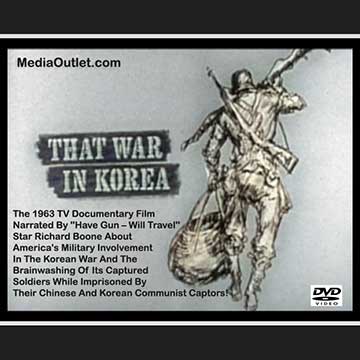
October 19, 1950: Korea: The History Of
Korea: The Aftermath Of World War II: The Cold War: The Cold War
In Asia: The Korean Conflict: The Cold War (1947-1953): The Cold
War In Asia: The Korean War: The Battle Of Pyongyang: -- American
and South Korean elements of the United Nations Command (UNC, UN
Command) win The Battle Of Pyongyang (1950) when they capture the
North Korean capital of Pyongyang; within hours, The People's
Republic Of China (PRC) enters the Korean War by sending many
hundreds of thousands of troops across the Yalu River to fight
against the United Nations forces. On August 20, 1950, Premier
Zhou Enlai informed the UN that "Korea is China's neighbor
... The Chinese people cannot but be concerned about a solution of
the Korean question". Thus, through neutral-country
diplomats, China warned that in safeguarding Chinese national
security, they would intervene against the UN Command in Korea.
President Truman interpreted the communication as "a bald
attempt to blackmail the UN", and dismissed it. On Sale @ 15%
Off Discount Till Midnight PT!
https://store.earthstation1.com/that-war-in-korea-tv-documentary-feature-film-dvd.html
Today's
EarthStation1.com 15% Off Commemorative Memorial Title: Tibet
History & The Dalai Lama Documentaries DVD, MP4, USB Drive
Today, October 19, 2025
October 19, 1950: The Aftermath Of World
War II: The Cold War: The Annexation Of Tibet By The People's
Republic Of China: The Battle Of Chamdo (Chinese: The Battle Of
Qamdo) -- The military campaign of the People's Republic of China
(PRC) to take the Chamdo Region from a de facto independent
Tibetan state begins, a battle which lasts until October 24, when
the campaign resulted in the capture of Chamdo and the annexation
of Tibet by the People's Republic of China after the Government of
Tibet signed the Seventeen Point Agreement, which the 14th Dalai
Lama ratified a year later on October 24, 1951, but later
repudiated on the grounds that he had rendered his approval for
the agreement under duress. The Battle Of Chamdo and the
subsequent Annexation Of Tibet occurred after attempts by the
Tibetan Government to gain international recognition, efforts to
modernize its military, negotiations between the Government of
Tibet and the PRC, and a military conflict in the Chamdo area of
western Kham in October 1950. The series of events came to be
called "The Peaceful Liberation Of Tibet" by the Chinese
government (despite several thousand casualties being reported by
Chinese generals throughout the invasion), and "The Chinese
Invasion Of Tibet" by the Central Tibetan Administration and
the Tibetan diaspora. On Sale @ 15% Off Discount Till Midnight PT!
https://store.earthstation1.com/tibet-documentaries-2-dvd-se2.html
Today's
EarthStation1.com 15% Off Commemorative Memorial Title: Castro's
Cuba: Two Views/Guantanamo DVD, MP4 Download, USB Flash Drive
Today, October 19, 2025
October 19, 1960: Cuba: The History Of
Cuba: The Aftermath Of World War II: The Cold War: The Cold War
(1953-1962): The Cuban Cold War: The United States Embargo Against
Cuba: -- The U.S. embargo of Cuba began as the Eisenhower
Administration's State Department prohibits shipment of all goods
except medicine and food. The embargo prevents American
businesses, and businesses with commercial activities in the
United States, from conducting trade with Cuban interests. It is
the most enduring trade embargo in modern history. The United
States first imposed an embargo on the sale of arms to Cuba on
March 14, 1958, during the Fulgencio Batista regime. Again on
October 19, 1960 (almost two years after the Cuban Revolution had
led to the deposition of the Batista regime) the U.S. placed an
embargo on exports to Cuba except for food and medicine after Cuba
nationalized American-owned Cuban oil refineries without
compensation. On February 7, 1962 the embargo was extended to
include almost all exports. The embargo does not prohibit the
trade of food and humanitarian supplies. As of 2018, the embargo
is enforced mainly through six statutes: the Trading with the
Enemy Act of 1917, the Foreign Assistance Act of 1961, the Cuban
Assets Control Regulations of 1963, the Cuban Democracy Act of
1992, the Helms-Burton Act of 1996, and the Trade Sanctions Reform
and Export Enhancement Act of 2000. The stated purpose of the
Cuban Democracy Act of 1992 is to maintain sanctions on Cuba as
long as the Cuban government refuses to move toward
"democratization and greater respect for human rights".
The Helms-Burton Act further restricted United States citizens
from doing business in or with Cuba, and mandated restrictions on
giving public or private assistance to any successor government in
Havana unless and until certain claims against the Cuban
government were met. In 1999 President Bill Clinton expanded the
trade embargo by also disallowing foreign subsidiaries of U.S.
companies to trade with Cuba. In 2000 Clinton authorized the sale
of food and "humanitarian" products to Cuba. In Cuba,
the embargo is called el bloqueo (the blockade), despite there
being no naval blockade of the country by the United States since
the Cuban Missile Crisis in 1962. The Cuban government frequently
blames the US "blockade" for the economic problems of
Cuba. The United States has threatened to stop financial aid to
other countries if they trade non-food items with Cuba. However,
because the embargo is not popularly supported internationally and
other countries are not under the jurisdiction of U.S. law, U.S.
attempts to discourage its allies from trading with Cuba have not
been successful. The US's attempts to do so have been vocally
condemned by the United Nations General Assembly as an
extraterritorial measure that contravenes "the sovereign
equality of States, non-intervention in their internal affairs and
freedom of trade and navigation as paramount to the conduct of
international affairs". Despite the existence of the embargo,
Cuba can, and does, conduct international trade with many
countries, including many US allies; however, US based companies
which trade in Cuba do so at the risk of US sanctions. Cuba has
been a member of the World Trade Organization since 1995. The
European Union is Cuba's largest trading partner, and the United
States is the fifth-largest exporter to Cuba (6.6% of Cuba's
imports come from the US). Cuba must, however, pay cash for all
imports, as credit is not allowed. Beyond criticisms of human
rights in Cuba, the United States holds 6B USD worth of financial
claims against the Cuban government. The pro-embargo position is
that the U.S. embargo is, in part, an appropriate response to
these unaddressed claims. The Latin America Working Group argues
that pro-embargo Cuban-American exiles, whose votes are crucial in
the U.S. state of Florida, have swayed many politicians to adopt
views similar to their own. Some business leaders, including James
E. Perrella, Dwayne O. Andreas, and Peter Blyth, have opposed the
Cuban-American views, arguing that trading freely would be good
for Cuba and the United States. Since 1992, the UN General
Assembly has passed a resolution every year condemning the ongoing
impact of the embargo and declaring it in violation of the Charter
of the United Nations and of international law. In 2014, out of
the 193-nation assembly, 188 countries voted for the nonbinding
resolution, the United States and Israel voted against and the
Pacific Island nations Palau, Marshall Islands and Micronesia
abstained. Human-rights groups including Amnesty International,
Human Rights Watch, and the Inter-American Commission on Human
Rights have also been critical of the embargo. Critics of the
embargo often refer to it as a "blockade" and say that
the respective laws are too harsh, citing the fact that violations
can result in up to 10 years in prison. On Sale @ 15% Off Discount
Till Midnight PT!
https://store.earthstation1.com/castro39s-cuba-two-views-with-scott-simon-dvd-proandcon-fil39.html
Today's
EarthStation1.com 15% Off Commemorative Memorial Title: Faith
Under Fire: Roman Catholicism In The East Bloc DVD, MP4, USB
Today, October 19, 2025
October 19, 1984: #DOTD: #RIP: Jerzy
Popieluszko, Roman Catholic priest associated with the Solidarity
Union (b. September 14, 1947) #dies when he is killed by three
agents of Sluzba Bezpieczenstwa (Security Service of the Ministry
of Internal Affairs), who were shortly thereafter tried and
convicted of the murder. He is buried at St. Stanislaus Kostka
Church in Warsaw, Poland. Jerzy Popieluszko was born Alfons
Popieluszko in Okopy, near Suchowola, Republic of Poland. Jerzy
Popieluszko has been recognized as a martyr by the Catholic
Church, and was beatified on June 6, 2010 by Archbishop Angelo
Amato on behalf of Pope Benedict XVI. A miracle attributed to his
intercession and required for his canonization is now under
investigation. On Sale @ 15% Off Discount Till Midnight PT!
https://store.earthstation1.com/faith-under-fire-roman-catholicism-in-the-east-block-dvd-mp4-us4.html
Today's
EarthStation1.com 15% Off Commemorative Memorial Title: Saddam
Hussein: His Life, His Regime, His Iraq DVD, Download, USB
Today, October 19, 2025
October 19, 2005: Iraq: The History Of
Iraq: Ba'athist Iraq (The Iraqi Republic [1968-1992]): The Iraq
War (Second Gulf War, Gulf War II): The Aftermath Of The Iraq War:
The Trial Of Saddam Hussein: -- Saddam Hussein, Iraqi general and
politician, 5th President of Iraq, goes on trial in Baghdad for
crimes against humanity. On December 30, 2006, he would be
executed by hanging following the trial's verdict. Saddam Hussein
Abd al-Majid al-Tikriti was a leading member of the revolutionary
Arab Socialist Ba'ath Party, and later, the Baghdad-based Ba'ath
Party and its regional organization the Iraqi Ba'ath Party. The
Iraqi Ba'ath Party espoused Ba'athism, an Arab nationalist
ideology that promotes the development and creation of a unified
Arab state through the combination of of a Marxist-Leninist
vanguard party leadership and a progressive revolutionary
government. Saddam played a key role in the 1968 coup (later
referred to as the 17 July Revolution), a bloodless coup led by
General Ahmed Hassan Al-Bakr which brought the Iraqi Ba'ath Party
to power. As vice president under the ailing General Ahmed Hassan
Al-Bakr, and at a time when many groups were considered capable of
overthrowing the government, Saddam created security forces
through which he tightly controlled conflicts between the
government and the armed forces. In the early 1970s, Saddam
nationalized oil and foreign banks, a decision that ultimately
resulted in the country;s insolvency caused by Iran-Iraq War, the
Gulf War, and UN sanctions. Through the 1970s, Saddam cemented his
authority over the apparatus of government as oil money helped
Iraq's economy to grow at a rapid pace. Positions of power in the
country were mostly filled with Sunni Arabs, a minority that made
up only a fifth of the population. Saddam formally rose to power
in 1979, although he had already been the de facto head of Iraq
for several years. He suppressed several movements, particularly
Shi'a and Kurdish movements, which sought to overthrow the
government or gain independence, and maintained power during the
Iran-Iraq War and the Gulf War. Whereas some in the Arab world
lauded Saddam for opposing the United States and attacking Israel,
he was widely condemned for the brutality of his dictatorship. The
total number of Iraqis killed by the security services of Saddam's
government in various purges and genocides is conservatively
estimated to be 250,000. Saddam's invasions of Iran and Kuwait
also resulted in hundreds of thousands of deaths. He acquired the
title "Butcher of Baghdad". In 2003, a coalition led by
the U.S. invaded Iraq to depose Saddam, in which U.S. President
George W. Bush and British Prime Minister Tony Blair falsely
accused him of possessing weapons of mass destruction and having
ties to al-Qaeda. Saddam's Ba'ath party was disbanded and
elections were held. Following his capture on 13 December 2003,
the trial of Saddam took place under the Iraqi Interim Government.
On 5 November 2006, Saddam was convicted by an Iraqi court of
crimes against humanity related to the 1982 killing of 148 Iraqi
Shi'a, and sentenced to death by hanging. On Sale @ 15% Off
Discount Till Midnight PT!
https://store.earthstation1.com/saddam-hussein-his-life--his-regime--his-iraq-dvd-3-disc3.html
Today's
EarthStation1.com #OnThisDay Commemorative Memorial Title: The Old
Time Radio History MP3 MegaSet DVD, Audio Download, USB Drive
Today, October 19, 2025 October 19, 1216: #DOTD: King John Of
England, nicknamed John Lackland, villain in Robin Hood folklore
and the signer of the Magna Carta, King of England from 1199 until
his death (b. December 24, 1166) #dies of dysentary contracted
while on campaign in eastern England during The First Barons' War
(1215-1217) aged 49 at Newark Castle in Newark-On-Trent, a market
town and civil parish in the Newark and Sherwood district in the
English county of Nottinghamshire, England on the River Trent. He
is buried at Worcester Cathedral in Worcester, England. He was
succeeded on the throne by his nine-year-old son Henry III, who
along with his supporters went on to achieve victory over Louis
and the rebel barons the following year. John was born John
Plantagenet on Christmas Eve 1166 into the royal house of
Plantagenet-Angevin, the youngest son of King Henry II of England
and the powerful Duchess Eleanor Of Aquitaine. John was nicknamed
John Lackland (Norman: Jean Sans Terre, "John Without Land")
because, as a younger son, he was not expected to inherit
significant lands. His father had inherited significant
territories along the Atlantic seaboard -- Anjou, Normandy and
England -- and expanded his possessions by exercising his ducal
claim over Brittany. John's mother Eleanor had a tenuous claim to
Toulouse and Auvergne in southern France, and was the former wife
of King Louis VII of France. The territories of Henry and Eleanor
formed the Angevin Empire, named after Henry's paternal title as
Count of Anjou and, more specifically, its seat in Angers. John
became Henry's favourite child following the failed revolt of
1173-1174 by his brothers Henry the Young King, Richard, and
Geoffrey against their father. John was appointed Lord Of Ireland
in 1177 and given lands in England and on the continent. During
the reign of his brother Richard I, he unsuccessfully attempted a
rebellion against Richard's royal administrators while the King
was participating in The Third Crusade, but he was proclaimed king
after Richard died in 1199. He came to an agreement with Philip II
of France to recognise John's possession of the continental
Angevin lands at the peace treaty of Le Goulet in 1200. When war
with France broke out again in 1202, John achieved early
victories, but shortages of military resources and his treatment
of Norman, Breton, and Anjou nobles resulted in the collapse of
his empire in northern France in 1204. He spent much of the next
decade attempting to regain these lands, raising huge revenues,
reforming his armed forces and rebuilding continental alliances.
His judicial reforms had a lasting effect on the English common
law system, as well as providing an additional source of revenue.
His dispute with Pope Innocent III over the election of Archbishop
of Canterbury Stephen Langton led to the Papal Interdict of 1208,
in which church services were banned until 1214, as well as John's
excommunication the following year, a dispute he finally settled
in 1213. John's attempt to defeat Philip in 1214 failed because of
the French victory over John's allies at the Battle of Bouvines.
He lost the Duchy of Normandy and most of his other French lands
to King Philip II of France, resulting in the collapse of the
Angevin Empire and contributing to the subsequent growth in power
of the French Capetian dynasty during the 13th century. When he
returned to England, John faced The First Barons' War, a rebellion
by many of his barons, who were unhappy with his fiscal policies
and his treatment of many of England's most powerful nobles. Magna
Carta was drafted as a peace treaty between John and the barons,
and agreed in 1215, a document considered a foundational milestone
in English and later British constitutional history. However,
neither side complied with its conditions and civil war broke out
shortly afterwards, with the barons aided by Prince Louis of
France. It soon descended into a stalemate. Contemporary
chroniclers were mostly critical of John's performance as king,
and his reign has since been the subject of significant debate and
periodic revision by historians from the 16th century onwards.
Historian Jim Bradbury has summarised the current historical
opinion of John's positive qualities, observing that John is today
usually considered a "hard-working administrator, an able
man, an able general". Nonetheless, modern historians agree
that he also had many faults as king, including what historian
Ralph Turner describes as "distasteful, even dangerous
personality traits", such as pettiness, spitefulness, and
cruelty. These negative qualities provided extensive material for
fiction writers in the Victorian era, and John remains a recurring
character within Western popular culture.
https://store.earthstation1.com/the-old-time-radio-history-megaset-dual-layer-mp3-dv3.html
October 19, 1216: #DOTD: King John Of
England, nicknamed John Lackland, villain in Robin Hood folklore
and the signer of the Magna Carta, King of England from 1199 until
his death (b. December 24, 1166) #dies of dysentary contracted
while on campaign in eastern England during The First Barons' War
(1215-1217) aged 49 at Newark Castle in Newark-On-Trent, a market
town and civil parish in the Newark and Sherwood district in the
English county of Nottinghamshire, England on the River Trent. He
is buried at Worcester Cathedral in Worcester, England. He was
succeeded on the throne by his nine-year-old son Henry III, who
along with his supporters went on to achieve victory over Louis
and the rebel barons the following year. John was born John
Plantagenet on Christmas Eve 1166 into the royal house of
Plantagenet-Angevin, the youngest son of King Henry II of England
and the powerful Duchess Eleanor Of Aquitaine. John was nicknamed
John Lackland (Norman: Jean Sans Terre, "John Without Land")
because, as a younger son, he was not expected to inherit
significant lands. His father had inherited significant
territories along the Atlantic seaboard -- Anjou, Normandy and
England -- and expanded his possessions by exercising his ducal
claim over Brittany. John's mother Eleanor had a tenuous claim to
Toulouse and Auvergne in southern France, and was the former wife
of King Louis VII of France. The territories of Henry and Eleanor
formed the Angevin Empire, named after Henry's paternal title as
Count of Anjou and, more specifically, its seat in Angers. John
became Henry's favourite child following the failed revolt of
1173-1174 by his brothers Henry the Young King, Richard, and
Geoffrey against their father. John was appointed Lord Of Ireland
in 1177 and given lands in England and on the continent. During
the reign of his brother Richard I, he unsuccessfully attempted a
rebellion against Richard's royal administrators while the King
was participating in The Third Crusade, but he was proclaimed king
after Richard died in 1199. He came to an agreement with Philip II
of France to recognise John's possession of the continental
Angevin lands at the peace treaty of Le Goulet in 1200. When war
with France broke out again in 1202, John achieved early
victories, but shortages of military resources and his treatment
of Norman, Breton, and Anjou nobles resulted in the collapse of
his empire in northern France in 1204. He spent much of the next
decade attempting to regain these lands, raising huge revenues,
reforming his armed forces and rebuilding continental alliances.
His judicial reforms had a lasting effect on the English common
law system, as well as providing an additional source of revenue.
His dispute with Pope Innocent III over the election of Archbishop
of Canterbury Stephen Langton led to the Papal Interdict of 1208,
in which church services were banned until 1214, as well as John's
excommunication the following year, a dispute he finally settled
in 1213. John's attempt to defeat Philip in 1214 failed because of
the French victory over John's allies at the Battle of Bouvines.
He lost the Duchy of Normandy and most of his other French lands
to King Philip II of France, resulting in the collapse of the
Angevin Empire and contributing to the subsequent growth in power
of the French Capetian dynasty during the 13th century. When he
returned to England, John faced The First Barons' War, a rebellion
by many of his barons, who were unhappy with his fiscal policies
and his treatment of many of England's most powerful nobles. Magna
Carta was drafted as a peace treaty between John and the barons,
and agreed in 1215, a document considered a foundational milestone
in English and later British constitutional history. However,
neither side complied with its conditions and civil war broke out
shortly afterwards, with the barons aided by Prince Louis of
France. It soon descended into a stalemate. Contemporary
chroniclers were mostly critical of John's performance as king,
and his reign has since been the subject of significant debate and
periodic revision by historians from the 16th century onwards.
Historian Jim Bradbury has summarised the current historical
opinion of John's positive qualities, observing that John is today
usually considered a "hard-working administrator, an able
man, an able general". Nonetheless, modern historians agree
that he also had many faults as king, including what historian
Ralph Turner describes as "distasteful, even dangerous
personality traits", such as pettiness, spitefulness, and
cruelty. These negative qualities provided extensive material for
fiction writers in the Victorian era, and John remains a recurring
character within Western popular culture.
https://store.earthstation1.com/the-old-time-radio-history-megaset-dual-layer-mp3-dv3.html
Today's
EarthStation1.com #OnThisDay Commemorative Memorial Title:
Monarchy In The UK: British Royal History MP4 Video Download DVD
Set
Today, October 19, 2025October 19, 1216: The English Monarchy
(The Monarchy Of The Kingdom Of England): Royal Accessions:
Successions To The English And Irish Thrones: -- Henry III, also
known as Henry Of Winchester, King Of England, Lord Of Ireland and
Duke Of Aquitaine upon the death of his father King John Of
England in 1216 until his death (October 1, 1207 - November 16,
1272) assumes his supreme monarchical titles at the age of nine in
the middle of the First Barons' War, following the death of his
father. Henry III was born Henry Plantagenet III into the royal
house of Plantagenet in Winchester Castle, Hampshire, England, the
son of John, King of England, and Isabella of Angouleme, Queen Of
England from 1200 to 1216 as the second wife of King John,
Countess Of Angouleme in her own right from 1202 until her death
in 1246, and later Countess Of La Marche from 1220 to 1246 as the
wife of Count Hugh. When Henry became King, Cardinal Guala
Bicchieri declared the war against the rebel barons to be a
religious crusade, and Henry's forces, led by William Marshal,
defeated the rebels at the battles of Lincoln and Sandwich in
1217. Henry promised to abide by the Great Charter of 1225, a
later version of Magna Carta (1215), which limited royal power and
protected the rights of the major barons. Henry's early reign was
dominated first by William Marshal, and after his death in 1219 by
the magnate Hubert de Burgh, Earl of Kent. In 1230 the King
attempted to reconquer the provinces of France that had once
belonged to his father, but the invasion was a debacle. A revolt
led by William Marshal's son Richard broke out in 1232, ending in
a peace settlement negotiated by the Catholic Church. Following
the revolt, Henry ruled England personally, rather than governing
through senior ministers. He travelled less than previous
monarchs, investing heavily in a handful of his favourite palaces
and castles. He married Eleanor of Provence, with whom he had five
children. Henry was known for his piety, holding lavish religious
ceremonies and giving generously to charities; the King was
particularly devoted to the figure of Edward the Confessor, whom
he adopted as his patron saint. He extracted huge sums of money
from the Jews in England, ultimately crippling their ability to do
business. As attitudes towards the Jews hardened, he later
introduced the Statute of Jewry, which attempted to segregate the
Jewish community from the English populace. In a fresh attempt to
reclaim his family's lands in France, he invaded Poitou in 1242,
leading to the disastrous Battle of Taillebourg. After this, Henry
relied on diplomacy, cultivating an alliance with Frederick II,
Holy Roman Emperor. Henry supported his brother Richard of
Cornwall in his successful bid to become King of the Romans in
1256, but was unable to place his own son Edmund Crouchback on the
throne of Sicily, despite investing large amounts of money. He
planned to go on crusade to the Levant, but was prevented from
doing so by rebellions in Gascony. By 1258, Henry's rule had grown
increasingly unpopular due to the failure of his expensive foreign
policies, the notoriety of his Poitevin half-brothers, and the
role of his local officials in collecting taxes and debts. In
response to this state of affairs, a coalition of his barons
seized power in a coup d'etat and expelled the Poitevins from
England, reforming the royal government through a process called
the Provisions of Oxford. In 1259, Henry and the baronial
government consented to the Treaty of Paris, under which Henry
gave up his rights to his other lands in France in return for King
Louis IX recognising him as the rightful ruler of Gascony. Despite
the ultimate collapse of the baronial regime, Henry was unable to
reform a stable government and instability continued across
England. In 1263 one of the more radical barons, Simon de
Montfort, seized power, resulting in the Second Barons' War. Henry
persuaded Louis to support his cause and mobilised an army. The
Battle of Lewes was fought in 1264 when Henry was defeated and
taken prisoner. Henry's eldest son, Edward, escaped from captivity
to defeat Simon at the Battle of Evesham the following year and
freed his father. Henry initially exacted a harsh revenge on the
remaining rebels but was persuaded by the Church to mollify his
policies through the Dictum of Kenilworth. Reconstruction was
slow, and Henry had to acquiesce to several measures, including
further suppression of the Jews, to maintain baronial and popular
support. Henry died at Fontevraud Abbey, France, aged about 58 or
60, leaving Edward as his successor. He was buried in Westminster
Abbey, which he had rebuilt in the second half of his reign, and
was moved to his current tomb in Fontevraud Abbey in 1290. Some
miracles were declared after his death, but he was not canonised.
Henry's reign of 56 years was the longest in medieval English
history and would not be surpassed by an English, or later
British, monarch until that of George III in the 18th and 19th
centuries.
https://store.earthstation1.com/monarchy-in-the-uk-british-royal-history-mp4-video-download-dvd-set.html
Today's
EarthStation1.com #OnThisDay Commemorative Memorial Title:
Gulliver's Travels 1939 Cartoon Feature Film DVD, Download, USB
Drive
Today, October 19, 2025October 19, 1745: #DOTD: #RIP: Jonathan
Swift, Anglo-Irish satirist, essayist, political pamphleteer
(first for the Whigs, then for the Tories), poet and cleric who
became Dean of St Patrick's Cathedral, Dublin, hence his common
sobriquet, "Dean Swift" (b. November 30, 1667) #dies in
the city of his birth, Dublin, Ireland, aged 79. After being laid
out in public view for the people of Dublin to pay their last
respects, he was buried in his own cathedral by Esther Johnson's
side, in accordance with his wishes. The bulk of his fortune (12
pounds) was left to found a hospital for the mentally ill,
originally known as St Patrick's Hospital for Imbeciles, which
opened in 1757, and which still exists as a psychiatric hospital.
Jonathan Swift was born in Dublin, Ireland. Jonathan Swift is
remembered for works such as A Tale of a Tub (1704), An Argument
Against Abolishing Christianity (1712), Gulliver's Travels (1726),
and A Modest Proposal (1729). He is regarded by the Encyclopaedia
Britannica as the foremost prose satirist in the English language,
and is less well known for his poetry. He originally published all
of his works under pseudonyms - such as Lemuel Gulliver, Isaac
Bickerstaff, M. B. Drapier - or anonymously. He was a master of
two styles of satire, the Horatian and Juvenalian styles. His
deadpan, ironic writing style, particularly in A Modest Proposal,
has led to such satire being subsequently termed "Swiftian".
His best known full-length work is "Gulliver's Travels, or
Travels into Several Remote Nations of the World. In Four Parts.
By Lemuel Gulliver, First a Surgeon, and then a Captain of Several
Ships", published by Benjamin Motte on October 28, 1726. It
is a satire of both human nature and the "travellers' tales"
literary subgenre, and is a classic of English literature. Swift
claimed that he wrote Gulliver's Travels "to vex the world
rather than divert it". The book was an immediate success.
The English dramatist John Gay remarked "It is universally
read, from the cabinet council to the nursery." In 2015,
Robert McCrum released his selection list of 100 best novels of
all time in which Gulliver's Travels is listed as "a
satirical masterpiece".
https://store.earthstation1.com/gulliver39s-travels-dvd-remastered-1939-max-amp-dave-fle391939.html
Today's
EarthStation1.com #OnThisDay Commemorative Memorial Title:
Hollywood (1980) Silent Movie History Series DVD, Video Download,
USB
Today, October 19, 2025October 19, 1862: #BOTD: #HBD! Auguste
Lumiere, French director and producer (d. April 10, 1954) is #born
Auguste Marie Louis Nicolas Lumiere in Besancon, France. The
Lumiere brothers, Auguste Marie Louis Nicolas and Louis Jean, were
among the first filmmakers in history. They patented an improved
cinematograph, which in contrast to Thomas Edison's "peepshow"
kinetoscope allowed simultaneous viewing by multiple parties,
inventing thereby the audience-based movie show, the cinema show.
Auguste Lumiere died in Besancon, France of unspecified causes,
aged 91. He is buried along with his brother Louis in a family
tomb at the New Guillotiere Cemetery in Lyon, France.
https://store.earthstation1.com/hollywood-1980-tv-documentary-series-13-shows-4-dual-lay1980134.html
Today's
EarthStation1.com #OnThisDay Commemorative Memorial Title: Subways
Trains & Railroads! Rail Transport History DVD, Download, USB
Today, October 19, 2025October 19, 1897: #DOTD: #RIP: George
Pullman, American engineer, industrialist and Railroad car builder
who designed and manufactured the Pullman sleeping car, founder of
the company town of Pullman, Chicago for his workers (b. March 3,
1831) #dies of a heart attack in Chicago, Illinois, aged 66.
Pullman was buried at Graceland Cemetery in Chicago. George
Pullman was born George Mortimer Pullman in Brocton, New York. He
improved railroad sleeping accommodations, developing the folding
upper berth and lower berth designs. His company went on to become
the biggest railroad car building organization in the world. His
Pullman Company also hired African American men to staff the
Pullman cars, who became known and widely respected as Pullman
porters, providing elite service. While this gave Pullman a place
of honor in African American history, he nevertheless lowered
wages and required workers to spend longer hours at his plant
without lowering the prices of rents and goods in his company town
after a downturn in demand for his products in 1894. He gained
presidential support by Grover Cleveland for the use of federal
military troops which left 30 strikers dead in the violent
suppression of workers there to end the Pullman Strike of 1894. A
national commission was appointed to investigate the strike, which
included assessment of operations of the company town. In 1898 the
Supreme Court of Illinois ordered the Pullman Company to divest
itself of the town which became a neighborhood of the city of
Chicago.
https://store.earthstation1.com/subways-trains-and-railroads-locomotive-films-2-dual-layer-dvd2.html
Today's
EarthStation1.com #OnThisDay Commemorative Memorial Title: Lyndon
Johnson's Lonely Hearts Club Band Comedy LP MP3 CD Download USB
Today, October 19, 2025October 19, 1998: #DOTD: #RIP: Earle
Doud, American comedy writer and record producer (b. February 14,
1927) #dies in Los Angeles, California. His burial details are not
publicly disclosed. Earle Doud was born in New York City. Earle
Doud penned jokes for such television comics as Johnny Carson,
Jack Paar, and Jonathan Winters and for the popular television
series Father Knows Best in the 1950s and early '60s. His debut
album, Sounds Funny, took a humorous look at sound effects. Doud's
most successful outing was an album, The First Family, recorded on
October 27, 1962, that poked fun at President John F. Kennedy's
White House. Written and produced with Bob Booker and featuring
Vaughn Meader as the President and Naomi Brossart as the First
Lady, it was a phenomenal success, selling more than seven and a
half million copies. Although a second volume, released in the
spring of 1963, received an equally warm reception, it was pulled
from the marketplace following Kennedy's assassination on November
22, 1963. The American presidency continued to be a source for
Doud's humor, as he subsequently wrote and produced similar albums
Lyndon Johnson's Lonely Hearts Club Band with Alen Robin in 1967
and The First Family Rides Again, which spoofed the Ronald Reagan
era, in 1981. He also produced the albums Spiro T. Agnew Is a
Riot, parodying Nixon's vice president in 1971, and Henry The
First, featuring Kenneth Mars doing an uncanny Henry Kissinger
impression in 1974.
https://store.earthstation1.com/lyndon-johnson39s-lonely-hearts-club-band-comedy-album-mp3393.html
Today's
EarthStation1.com #OnThisDay Commemorative Memorial Title:
National Lampoon: The Missing White House Tapes LP MP3 CD Download
USB
Today, October 19, 2025October 19, 1973: Scandals: Political
Scandals: Political Scandals Of The United States: Richard Nixon:
The Presidency Of Richard Nixon: The Watergate Scandal: The Nixon
White House Tapes: -- President Richard Nixon rejects an Appeals
Court decision that he turn over the Nixon White House Tapes
relevant to the Watergate Scandal. On July 16, 1973, White House
aide Alexander Butterfield told the Senate Watergate Committee in
a televised hearing that Nixon had ordered a taping system
installed in the White House to automatically record all
conversations. Special Counsel Archibald Cox, a former United
States Solicitor General under President John F. Kennedy, asked
District Court Judge John Sirica to subpoena nine relevant tapes
to confirm the testimony of White House Counsel John Dean.
President Nixon initially refused to release the tapes, for two
reasons: first, that the Constitutional principle of executive
privilege extends to the tapes and citing the separation of powers
and checks and balances within the Constitution, and second,
claiming they were vital to national security. On Friday October
19, 1973, he offered a compromise; Nixon proposed that U.S.
Senator John C. Stennis review and summarize the tapes for
accuracy and report his findings to the special prosecutor's
office. Special prosecutor Archibald Cox refused the compromise
and on Saturday, October 20, 1973, Nixon ordered Attorney General
Elliot Richardson to dismiss Cox. Richardson refused and resigned
instead, then Deputy Attorney General William Ruckelshaus was
asked to dismiss Cox but refused and was subsequently fired.
Solicitor General and acting head of the Justice Department Robert
Bork discharged Cox. These repeated attempts by Nixon to fire Cox
became known as the Saturday Night Massacre.
https://store.earthstation1.com/national-lampoon-missing-white-house-tapes-1974-lp-m19743.html
Today's
EarthStation1.com #OnThisDay Commemorative Memorial Title:
Millhouse: A White Comedy (1971) Richard Nixon Farce MP4 Download
DVD
Today, October 19, 2025October 19, 1922: #BOTD: #HBD! Jack
Anderson, American journalist and author, newspaper columnist,
syndicated by United Features Syndicate, considered one of the
founders of modern investigative journalism (d. December 17, 2005)
is #born Jack Northman Anderson in Long Beach, California.
Anderson won the 1972 Pulitzer Prize for National Reporting for
his investigation on secret U.S. policy decision-making between
the United States and Pakistan during the Indo-Pakistani War of
1971. In addition to his newspaper career, Anderson also had a
national radio show on the Mutual Broadcasting System, acted as
Washington bureau chief of Parade magazine, and was a commentator
on ABC-TV's Good Morning America for nine years. Among the exposes
Anderson reported were the Nixon administration's investigation
and harassment of John Lennon during its fight to deport Lennon;
the continuing activities of fugitive Nazi officials in South
America; and the savings and loan crisis. He revealed the history
of a CIA plot to assassinate Fidel Castro and was credited for
breaking the story of the Iran-Contra Affair under President
Reagan. He said that the scoop was "spiked" because the
story had become too close to President Ronald Reagan. Jack
Anderson died of complications from Parkinson's disease in
Bethesda, Maryland, aged 83. He is buried at Ferguson Family
Cemetery in Poages Mill, Virginia.
https://store.earthstation1.com/millhouse-a-white-comedy-dvd-1971-richard-nixon-documen1971.html
Today's
EarthStation1.com #OnThisDay Commemorative Memorial Title: George
Marshall And The American Century Biodoc MP4 Video Download DVD
Today, October 19, 2025October 19, 2004: #DOTD: #RIP: Paul
Nitze, American businessman, banker, politician and government
official who helped shape U.S. Cold War defense policy over the
course of numerous presidential administrations, best known for
being the principal author of NSC 68 -- a top secret U.S. National
Security Council (NSC) policy paper drafted for President Truman,
one of the most important American policy statements of the Cold
War -- and the co-founder of Team B -- a competitive analysis
exercise commissioned by the Central Intelligence Agency (CIA) to
analyze threats the Soviet Union posed to the security of the
United States -- tenth United States Secretary of the Navy, United
States Deputy Secretary of Defense, U.S. and Director of Policy
Planning for the U.S. State Department (b. January 16, 1907) #dies
in Washington, D.C., at age 97. He is buried on the Nitze family
farm in Charles County, Maryland, which he had bought shortly
after moving to Washington, D.C., to work for the Roosevelt
administration. The Arleigh Burke-class destroyer USS Nitze is
named in his honor. Nitze visited the ship for several ceremonial
occasions prior to his death. The Paul H. Nitze School of Advanced
International Studies of the Johns Hopkins University is named in
his honor. St. Mary's College of Maryland, where he served as a
trustee, has an honors program in his name. Paul Nitze was born
Paul Henry Nitze in Amherst, Massachusetts, the son of Anina
Sophia (Hilken), a homemaker, and William Albert Nitze, a
professor of Romance linguistics who concluded his career at the
University of Chicago. His parents were both of German descent.
His ancestors came from the region of Magdeburg in the state of
Saxony-Anhalt, Germany. In his memoir, From Hiroshima to Glasnost,
Paul Nitze describes how as a young boy he witnessed the outbreak
of World War I while he was traveling in Germany with his father,
mother, and sister, arriving in Munich just in time to be struck
by the city crowds' patriotic enthusiasm for the imminent
conflict. Nitze attended The Hotchkiss School, where he was a
member of the class of 1924 and the University of Chicago
Laboratory Schools. He graduated from Harvard University in 1928
and entered the field of investment banking. In 1928 and 1929, the
Chicago brokerage firm of Bacon, Whipple and Company sent Nitze to
Europe. Upon his return, he heard Clarence Dillon predict the
Great Depression and the decline of the importance of finance.
Having attained financial independence through the sale to Revlon
of his interest in a French laboratory producing pharmaceutical
products in the United States, Nitze took an intellectual
sabbatical that included a year of graduate study at Harvard in
sociology, philosophy, and constitutional and international law.
In 1929 he joined investment bank Dillon, Read & Co. where he
remained until founding his own firm, P. H. Nitze & Co, in
1938. He returned to Dillon, Read as Vice-President from 1939
through to 1941. In 1932, he married Phyllis Pratt, daughter of
John Teele Pratt, a Standard Oil financier, and of Ruth Baker
Pratt, Republican Congresswoman for New York. She died in 1987.
They had four children: Heidi, Peter, William, and Phyllis Anina
(Nina). The journalist Nicholas Thompson, who wrote a biography of
Nitze and George F. Kennan, is his grandson. He was married to
Elisabeth Scott Porter from 1993 until his death in 2004. Nitze's
brother-in-law, Walter Paepcke, founded the Aspen Institute and
Aspen Skiing Company. Nitze continued to ski in Aspen until well
into his 80s. Paul Nitze had a long and distinguished career of
public service. Nitze entered government service during World War
II after having been hired by his Wall Street colleague James
Forrestal when Forrestal became an administrative assistant to
President Franklin D. Roosevelt. In 1942, he became finance
director of the Office of the Coordinator of Inter-American
Affairs, working for Nelson Rockefeller. In 1943 he became chief
of the Metals and Minerals Branch of the Board of Economic
Warfare, until he was named director, Foreign Procurement and
Development Branch of the Foreign Economic Administration later
that year. From 1944 to 1946, Nitze served as director and then as
Vice Chairman of the Strategic Bombing Survey for which President
Harry S. Truman awarded him the Legion of Merit. One of his early
government assignments was to visit Allied-occupied Japan in the
immediate aftermath of the atomic bombings of Hiroshima and
Nagasaki and assess the damage. This experience framed many of his
later feelings about the power of nuclear weapons and the
necessity of arms control. In the early postwar era and Cold War,
he served in the Truman Administration as Director of Policy
Planning for the State Department (1950-1953). He was also the
principal author in 1950 of the highly influential but secret
National Security Council policy paper, NSC 68, which provided the
strategic outline for increased US expenditures to counter the
perceived threat of Soviet armament. During the Korean War, he
advised the Truman administration against blaming the Soviet Union
for the conflict too directly in order to avoid risking an
escalation to World War III. From 1953 to 1961, Nitze served as
president of the Foreign Service Educational Foundation while
concurrently serving as associate of the Washington Center of
Foreign Policy Research and the School of Advanced International
Studies (SAIS) of the Johns Hopkins University. In 1956 he
attended the Project Nobska anti-submarine warfare conference,
where discussion ranged from oceanography to nuclear weapons.
Nitze co-founded the School of Advanced International Studies
(SAIS) with Christian Herter in 1943 and the world-renowned
graduate school, based in Washington, D.C., is named in his honor.
His publications during this period include U.S. Foreign Policy:
1945-1955. In 1961, President Kennedy appointed Nitze Assistant
Secretary of Defense for International Security Affairs. In 1963,
Nitze became the Secretary of the Navy, serving until 1967.
According to the US Navy "as the Navy secretary, he raised
the level of attention given to quality of Service issues. His
many achievements included establishing the first Personnel Policy
Board and retention task force (the Alford Board), and obtaining
targeted personnel bonuses. He lengthened commanding officer tours
and raised command responsibility pay." Following his term as
Secretary of the Navy, he served as Deputy Secretary of Defense
(1967-1969), as a member of the US delegation to the Strategic
Arms Limitation Talks (SALT) (1969-1973). Later, fearing Soviet
rearmament, he opposed the ratification of SALT II (1979). Paul
Nitze was a cofounder of Team B, a 1970s intelligence think tank
that challenged the National Intelligence Estimates provided by
the CIA. The Team B reports became the intellectual foundation for
the idea of "the window of vulnerability" and of the
massive arms buildup that began toward the end of the Carter
administration and accelerated under President Ronald Reagan. Team
B came to the conclusion that the Soviets had developed new
weapons of mass destruction and had aggressive strategies with
regard to a potential nuclear war. Team B's analysis of Soviet
weapon systems was later believed to be largely exaggerated.
According to Anne Cahn of the Arms Control and Disarmament Agency
(1977-1980), "if you go through most of Team B's specific
allegations about weapons systems, and you just examine them one
by one, they were all wrong." Nonetheless, some still claim
that its conclusions about Soviet strategical aims were largely
proven to be true, but this hardly squares with the elevation of
Gorbachev in 1985. Nitze was President Ronald Reagan's chief
negotiator of the Intermediate-Range Nuclear Forces Treaty
(1981-1984). In 1984, Nitze was named Special Advisor to the
President and Secretary of State on Arms Control. For more than
forty years, Nitze was one of the chief architects of US policy
toward the Soviet Union. In 1985 President Reagan awarded Nitze
the Presidential Medal of Freedom for his contributions to the
freedom and security of the United States. In 1986, he received
the Golden Plate Award of the American Academy of Achievement. In
1989, Nitze received the US Senator John Heinz Award for Greatest
Public Service by an Elected or Appointed Official, an award given
out annually by Jefferson Awards. In 1991, he was awarded the
prestigious United States Military Academy's Sylvanus Thayer Award
for his commitment to the Academy's ideals of "Duty, Honor,
Country". In 1997, Nitze was awarded the Naval Heritage Award
by the US Navy Memorial Foundation for his support of the US Navy
while he was Secretary of the Navy.
https://store.earthstation1.com/george-marshall-and-the-american-century-biodoc-mp4-video-download-dvd.html
Today's
EarthStation1.com #OnThisDay Commemorative Memorial Title:
Appointment With Destiny: Showdown At O.K. Corral DVD, Download,
USB
Today, October 19, 2025October 19, 1905: #DOTD: #RIP: Virgil
Earp, both deputy U.S. Marshal and Tombstone, Arizona City Marshal
when he led his younger brothers Wyatt and Morgan, and Doc
Holliday, in a confrontation with outlaw Cowboys at the Gunfight
at the O.K. Corral which killed killed the outlaw brothers Tom and
Frank McLaury and their partner-in-crim Billy Clanton on October
26, 1881 (b. Virgil Walter Earp July 18, 1843 in Hartford,
Kentucky) #dies of a relapse of pneumonia at St. Mary's hospital
in Goldfield, Nevada, aged 62. In the memoirs of Earp's common-law
wife, Alvira "Allie" Earp, she wrote that Virgil's last
words were, "Light my cigar, and stay here and hold my hand."
His brother Wyatt was the last surviving participant of the
Gunfight at the O.K. Corral. Virgil was also survived by his
father Nicholas, brothers James and Newton, wife Allie, and
daughter Nellie. At the request of his daughter, Nellie Jane Bohn,
Allie sent his body to Portland, Oregon, and he was buried in the
River View Cemetery there. All three Earp brothers had been the
target of repeated death threats made by the Cowboys who were
upset by the Earps' interference in their illegal activities. All
four lawmen were charged with murder by Ike Clanton, who had run
from the gunfight. During a month-long preliminary hearing, Judge
Wells Spicer exonerated the men, concluding they had been
performing their duty. But two months later on December 28,
friends of the slain outlaws retaliated, ambushing Virgil. They
shot him in the back, hitting him with three shotgun rounds,
shattering his left arm and leaving him permanently maimed. The
Cowboys suspected were let off for lack of evidence. His brother
Morgan Earp was assassinated in March 1882. Charges against those
suspected were dismissed on a technicality. Wyatt Earp, appointed
as deputy U.S. Marshal to replace Virgil, concluded he could not
rely on civil justice and decided to take matters into his own
hands. Wyatt assembled a federal posse that included their brother
Warren Earp and set out on a vendetta to kill those they felt were
responsible. Virgil left Tombstone to recuperate from his wounds
in Colton, California where his parents lived. Virgil married
before he left to serve in the Union Army during the American
Civil War. When he returned, his wife and child had left. He held
a variety of other jobs throughout his life, though he primarily
worked in law enforcement. His younger brother Wyatt, who spent
most of his life as a gambler, became better known as a lawman
because of writer Stuart N. Lake's fictionalized 1931 biography
Wyatt Earp: Frontier Marshal and later portrayals of him in movies
and fiction as Old West's "toughest and deadliest gunmen of
his day." In 1898, Virgil learned that his first wife Ellen
Rysdam and their daughter were living in Oregon and reestablished
contact with them. After suffering from pneumonia for six months,
Virgil died on October 19, 1905.
https://store.earthstation1.com/appointment-with-destiny-showdown-at-ok-corral-dvd.html
Today's
EarthStation1.com #OnThisDay Commemorative Memorial Title: The
Celts TV Series On Celtic History & Culture DVD Download USB
Drive
Today, October 19, 2025October 19, 1988: The History Of
Broadcasting: The History Of Television Broadcasting: Censorship:
Censorship Of Broadcasting: Censorship Of Broadcasting In The
United Kingdom: -- The British government imposes a broadcasting
ban on television and radio interviews with members of Sinn Fein
and eleven Irish republican and Ulster loyalist paramilitary
groups. As a result, when President of Sinn Fein Gerry Adams
appeared on the British television documentary series The Celts,
his voice could not be heard, instead his words had to appear in
closed captions.
https://store.earthstation1.com/the-celts-dvd-set-tv-series-all-6-shows-celtic-history-3-dis63.html
Today's
EarthStation1.com #OnThisDay Commemorative Memorial Title: John
LeCarre Documentary Biography DVD, Video Download, USB Drive
Today, October 19, 2025October 19, 1931: #BOTD: #HBD! John Le
Carre, English intelligence officer and author (d. December 12,
2020) is #born David John Moore Cornwell in Poole, Dorset,
England. David John Moore Cornwell is best known by the pen name
John Le Carre. He is a British author of espionage novels. During
the 1950s and 1960s, he worked for both the Security Service and
the Secret Intelligence Service. His third novel, The Spy Who Came
in from the Cold (1963), became an international best-seller and
remains one of his best-known works. Following the success of this
novel, he left MI6 to become a full-time author. His novel Tinker
Tailor Soldier Spy became a hit TV miniseries starring Aleq
Guinness, a success followed-up by the BBC in two more miniseries,
Smiley's People and the A Perfect Spy. John Le Carre died at Royal
Cornwall Hospital, Truro aged 89 after sustaining a fall at his
home. His remains were cremated; the final disposition of his
ashes are unknown.
https://store.earthstation1.com/john-lecarre-dvd-espionage-novelist.html
Today's
EarthStation1.com #OnThisDay Commemorative Memorial Title: The
Night That Panicked America: War Of The Worlds DVD, Download, USB
Today, October 19, 2025October 19, 2010: #DOTD: #RIP: Tom
Bosley, American character actor, television personality and
entertainer (b. October 1, 1927) #dies aged 83 while battling lung
cancer from complications of a staph infection at a hospital in
Rancho Mirage, California, near his home in Palm Springs,
California. He is buried at Forest Lawn Memorial Park in Hollywood
Hills, Los Angeles County, California. Born Thomas Edward Bosley
in Chicago, Illinois, he is best known for portraying Howard
Cunningham on the 1970s ABC sitcom Happy Days, and the title
character on the NBC/ABC series Father Dowling Mysteries. He also
was featured in a recurring role on Murder, She Wrote. He
originated the title role of the Broadway musical Fiorello!,
earning the 1960 Tony Award for Best Performance by a Featured
Actor in a Musical.
https://store.earthstation1.com/the-night-that-panicked-america-dvd-war-of-the-worlds-broadcast.html
Today's
EarthStation1.com #OnThisDay Commemorative Memorial Title:
Television: A History Of Broadcast TV DVD MP4 Download USB Drive
Today, October 19, 2025October 19, 1932: #BOTD: #HBD! Robert
Reed, American actor who played Kenneth Preston on the legal drama
The Defenders from 1961 to 1965 alongside E. G. Marshall, and is
best known for his role as the father Mike Brady, opposite
Florence Henderson's role as Carol Brady, on the ABC sitcom The
Brady Bunch, which aired from 1969 to 1974 (d. May 12, 1992) is
#born John Robert Rietz Jr. in the northern Chicago suburb of
Highland Park, Illinois. He reprised his role of Mike Brady on
several of the reunion programs. In 1976, he earned two Primetime
Emmy Award nominations for his guest-starring role in a two-part
episode of Medical Center and for his work on the miniseries Rich
Man, Poor Man. The following year, Reed earned a third Emmy
nomination for his role in the miniseries Roots. Robert Reed was
diagnosed with colon lymphoma, a rare form of colorectal cancer,
in November 1991. He died on May 12, 1992, at Huntington Memorial
Hospital in Pasadena, California, at age 59. Details written on
his death certificate were later made public, revealing that Reed
was also HIV-positive, having been diagnosed with HIV in the
spring of 1991, approximately half a year before his cancer
diagnosis. It remains unknown when Reed contracted HIV, because he
kept his medical condition and private life a secret from the
public until his death, telling only a few close friends. While
Reed did not have AIDS at the time of his death, his doctor listed
his HIV-positive status as one of the "significant conditions
that contributed to death" on the death certificate. He is
buried in the Memorial Park Cemetery in Skokie, Illinois.
https://store.earthstation1.com/television-1988-tv-documentary-series-8-shows-4-dual-laye198884.html
Today's
EarthStation1.com #OnThisDay Commemorative Memorial Title: The Day
After 1983 Nuclear Holocaust Drama DVD, Download, USB Drive
Today, October 19, 2025October 19, 1945: #BOTD: #HBD! John
Lithgow, American theater, television, and film actor, musician,
poet, author, and singer, is #born John Arthur Lithgow in
Rochester, New York. Lithgow studied at Harvard winning a
Fulbright scholarship and getting a chance to attend the London
Academy of Music and Dramatic Art. From there he focused his
training on the New York stage beginning a distinguished career on
Broadway. In 1973, Lithgow received his first Tony Award for his
performance in The Changing Room. In 1976 Lithgow acted alongside
Meryl Streep in three plays 27 Wagons Full of Cotton, A Memory of
Two Mondays, and Secret Service. In the 1980s he continued to
receive Tony Awards nominations for his performances in Requiem
for a Heavyweight (1985) and M. Butterfly (1988). In 2002, Lithgow
received his second Tony Award, this time for a musical, The Sweet
Smell of Success and another nomination for Dirty Rotten
Scoundrels (2005). In 2007, he made his Royal Shakespeare Company
debut as Malvolio in Neil Bartlett's production of Twelfth Night.
He has also appeared on Broadway in the acclaimed plays The
Columnist (2012) and A Delicate Balance (2014). He portrayed Bill
Clinton in Hillary and Clinton (2019) alongside Laurie Metcalf as
Hillary Clinton. Lithgow is also known for his television roles
such as Dick Solomon in the sitcom 3rd Rock from the Sun
(1996-2001) winning three Primetime Emmy Awards for Best Actor in
a Comedy Series for his performance. He also played Arthur
Mitchell in the drama Dexter (2009) and he won the Primetime Emmy
Award for Outstanding Guest Actor in a Drama. In 2004, Lithgow
played Blake Edwards in the HBO television movie, The Life and
Death of Peter Sellers. He has also appeared on 30 Rock, How I Met
Your Mother, Louie, and Drunk History. Lithgow won great acclaim
for his portrayal of Winston Churchill in Peter Morgan's
historical drama The Crown (2016-2019) on Netflix. For acting in
The Crown he won a Primetime Emmy Award and Screen Actors Guild
Award. In 2020, he had a recurring role on the HBO period series
Perry Mason. He is also well known for his film roles. His early
screen roles included Bob Fosse's All That Jazz (1979), and Brian
De Palma's Blow Out (1981). He received his first Academy Award
nomination for his breakout performance in The World According to
Garp (1982) and received a second Academy Award nomination for
Terms of Endearment (1983). He then starred in the films Footloose
(1984), Harry and the Hendersons (1987), The Pelican Brief and
Cliffhanger (1993), A Civil Action (1998), Rugrats in Paris: The
Movie (2000), Shrek (2001), Kinsey (2004), Dreamgirls (2006), Love
Is Strange (2014), Miss Sloane (2016), and Beatriz at Dinner
(2017). In 2019 he appeared in Mindy Kaling's comedy Late Night
and portrayed Roger Ailes in Bombshell. Over the course of his
career he has received numerous accolades including two Tony
Awards, six Emmy Awards, and two Golden Globe awards, and has been
nominated for two Academy Awards and four Grammy Awards. He has
also been awarded a star on the Hollywood Walk of Fame and
inducted into the American Theater Hall of Fame.
https://store.earthstation1.com/the-day-after-1983-dvd-nuclear-holocaust-d1983.html
Today's
EarthStation1.com #OnThisDay Commemorative Memorial Title: Civil
Props: The Lockheed Constellation DVD, MP4 Download, USB Drive
Today, October 19, 2025October 19, 1946: Aviation: The History
Of Aviation: The History Of Civil Aviation: Maiden Flights: --
First Flight of the Lockheed L-649 Constellation, the first real
civilian version of the Lockheed Constellation line, as the
Lockheed L-049 Constellation was a simple redesign from the
military Lockheed C-69 Constellation. The L-649 was planned to be
the new standard version of the Constellation, but the L-749
Constellation, a co-jointly produced improved derivative, was
chosen over the L-649 by most airlines. Most of the few L-649
aircraft built were delivered and operated by Eastern Air Lines.
The Lockheed Constellation ("Connie") is a
propeller-driven, four-engined airliner built by Lockheed
Corporation starting in 1943. The Constellation series was the
first pressurized-cabin civil airliner series to go into
widespread use. Its pressurized cabin enabled commercial
passengers to fly well above most bad weather for the first time,
thus significantly improving the general safety and ease of air
travel. Several different models of the Constellation series were
produced, although they all featured the distinctive triple-tail
and dolphin-shaped fuselage. Most were powered by four 18-cylinder
Wright R-3350 Duplex-Cyclones. In total, 856 were produced between
1943 and 1958 at Lockheed's plant in Burbank, California, and used
as both a civil airliner and as a military and civilian cargo
transport. Among their famous uses was during the Berlin and the
Biafran airlifts. Three served as the presidential aircraft for
Dwight D. Eisenhower, one of which is featured at the National
Museum of the United States Air Force.
https://store.earthstation1.com/civil-props-the-lockheed-constellation-dvd.html
Today's
EarthStation1.com #OnThisDay Commemorative Memorial Title: Nuclear
War Films #12 Operation Fishbowl DVD, Video Download, USB
Today, October 19, 2025October 19, 1962: The Aftermath Of World
War II: The Cold War: Nuclear Warfare: Nuclear Weapons Testing:
American Nuclear Warfare: American Nuclear Weapons Testing:
Operation Fishbowl: The Checkmate Test: -- On October 19, 1962, at
about 90 minutes before midnight (local Johnston Island time), an
XM-33 Strypi rocket launched a low-yield nuclear warhead which
detonated successfully at an altitude of 147 kilometres (91 mi).
Operation Fishbowl was a series of high-altitude nuclear tests in
1962 that were carried out by the United States as a part of the
larger Operation Dominic nuclear test program. Flight-test
vehicles were designed and manufactured by Avco Corporation. The
Operation Fishbowl nuclear tests were originally planned to be
completed during the first half of 1962 with three tests named
Bluegill, Starfish and Urraca. The first test attempt was delayed
until June. Planning for Operation Fishbowl, as well as many other
nuclear tests in the region, began rapidly in response to the
sudden Soviet announcement on August 30, 1961 that they were
ending a three-year moratorium on nuclear testing. The rapid
planning of very complex operations necessitated many changes as
the project progressed. All of the tests were to be launched on
missiles from Johnston Island in the Pacific Ocean north of the
equator. Johnston Island had already been established as a launch
site for United States high-altitude nuclear tests, rather than
the other locations in the Pacific Proving Grounds. In 1958, Lewis
Strauss, then chairman of the United States Atomic Energy
Commission, opposed doing any high-altitude tests at locations
that had been used for earlier Pacific nuclear tests. His
opposition was motivated by fears that the flash from the
nighttime high-altitude detonations might blind civilians who were
living on nearby islands. Johnston Island was a remote location,
more distant from populated areas than other potential test
locations. In order to protect residents of the Hawaiian Islands
from flash blindness or permanent retinal injury from the bright
nuclear flash, the nuclear missiles of Operation Fishbowl were
launched generally toward the southwest of Johnston Island so that
the detonations would be farther from Hawaii. Urraca was to be a
test of about 1 megaton yield at very high altitude (above 1000
km.). The proposed Urraca test was always controversial,
especially after the damage caused to satellites by the Starfish
Prime detonation. Ariel 1 was among several satellites
inadvertently damaged or destroyed by the Starfish Prime
high-altitude nuclear test on July 9, 1962, and subsequent
radiation belt. Its solar panels sustained damage from the
irradiation, affecting Ariel 1's operations. The satellite
operated even after the nuclear test. The radiation disabled the
timer that would have deactivated the satellite after one year,
effectively extending the satellite's life (Ariel 1 decayed from
orbit on 24 May 1976). Urraca was finally canceled, and an
extensive re-evaluation of the Operation Fishbowl plan was made
during an 82-day operations pause after the Bluegill Prime
disaster of July 25, 1962. A test named Kingfish was added during
the early stages of Operation Fishbowl planning. Two low-yield
tests, Checkmate and Tightrope, were also added during the
project, so the final number of tests in Operation Fishbowl was
five.
https://store.earthstation1.com/nuclear-war-films-12-dvd-operation-fishbo12.html
Today's
EarthStation1.com #OnThisDay Commemorative Memorial Title:
Napoleon (1955) Raymond Pellagrin Orson Welles DVD, Download, USB
Today, October 19, 2025October 19, 1805: The Age Of
Enlightenment (The Enlightenment, The Age Of Reason): The Age Of
Revolution: The Atlantic Revolutions: The French Revolution: The
French Revolutionary And Napoleonic Wars (The Great French War)
(The French Revolutionary Wars, The Napoleonic Wars): The
Napoleonic Wars: The Coalition Wars: The War Of The Third
Coalition: The Ulm Campaign: The Battle Of Ulm -- Austrian General
Mack surrenders his army to the Grande Armee of Napoleon Bonaparte
at the Battle of Ulm. 30,000 prisoners are captured and 10,000
casualties inflicted on the losers. The Battle of Ulm was a series
of skirmishes between October 16-19, 1805, at the end of the Ulm
Campaign, which allowed Napoleon I to trap an entire Austrian army
under the command of Karl Freiherr Mack Von Leiberich with minimal
losses and to force its surrender near Ulm in the Electorate of
Bavaria. The Ulm campaign was a series of French and Bavarian
military maneuvers and battles to outflank and capture an Austrian
army in 1805 during the War of the Third Coalition. It took place
in the vicinity of and inside the Swabian (then Bavarian) city of
Ulm. The French Grande Armee, led by Napoleon, had 210,000 troops
organized into seven corps and hoped to knock out the Austrian
army in the Danube before Russian reinforcements could arrive.
Rapid marching let Napoleon conduct a large wheeling maneuver,
which captured an Austrian army of 23,000 under General Mack on
October 20 at Ulm. That brought the total number of Austrian
prisoners-of-war in the campaign to 60,000. The campaign is
generally regarded as a strategic masterpiece and was influential
in the development of the Schlieffen Plan in the late 19th
century. The victory at Ulm did not end the war since a large
Russian army under Kutuzov was still near Vienna. The Russians
withdrew to the northeast to await reinforcements and to link up
with surviving Austrian units. The French followed and captured
Vienna on November 12. On December 2, the decisive French victory
at Austerlitz removed Austria from the war. The resulting Treaty
of Pressburg in late December brought the Third Coalition to an
end and left Napoleonic France as the major power in Central
Europe, which led to the War of the Fourth Coalition against
Prussia and Russia the following year.
https://store.earthstation1.com/napoleon-1955-dvd-raymond-pellagrin-orson-welles-2-19552.html
Today's
EarthStation1.com #OnThisDay Commemorative Memorial Title: Desiree
(1954) Marlon Brandon As Napoleon DVD, Download, USB Drive
Today, October 19, 2025October 19, 1813: The Age Of
Enlightenment (The Enlightenment, The Age Of Reason): The Age Of
Revolution: The Atlantic Revolutions: The French Revolution: The
French Revolutionary And Napoleonic Wars (The Great French War)
(The French Revolutionary Wars, The Napoleonic Wars): The
Napoleonic Wars: The Coalition Wars: The War Of The Sixth
Coalition: The German campaign Of 1813 (The German Campaign,
German: Befreiungskriege, "Wars Of Liberation"): The
Battle Of Leipzig (The Battle Of The Nations): -- Napoleon is
forced to retreat from Germany after the Battle of Leipzig. The
Battle of Leipzig, also known as the Battle Of The Nations, was
fought between October 16-19, 1813 at Leipzig, Saxony. The
Coalition armies of Austria, Prussia, Sweden, and Russia, led by
Tsar Alexander I and Karl Von Schwarzenberg, decisively defeated
the Grande Armee of French Emperor Napoleon Bonaparte. Napoleon's
army also contained Polish and Italian troops, as well as Germans
from the Confederation of the Rhine (mainly Saxony and
Wurttemberg). The battle was the culmination of the German
Campaign of 1813 and involved 560,000 soldiers, 2,200 artillery
pieces, the expenditure of 400,000 rounds of artillery ammunition,
and 133,000 casualties, making it the largest battle in Europe
prior to World War I. Decisively defeated again, Napoleon was
compelled to return to France while the Sixth Coalition kept up
its momentum, dissolving the Confederation of the Rhine and
invading France early the next year. Napoleon was forced to
abdicate and was exiled to Elba in May 1814.
https://store.earthstation1.com/desiree-1954-dvd-marlon-brando-as-napoleon-jean-sim1954.html
Today's
EarthStation1.com #OnThisDay Commemorative Memorial Title:
Revelation: The History Of Christianity DVD, Video Download, USB
Drive
Today, October 19, 2025October 19, 1512: Religion: The History
Of Religion: Abrahamic Religions: Christianity: Protestantism: The
Reformation (The Protestant Reformation, The European
Reformation): Lutheranism: The History Of Lutheranism: -- Martin
Luther becomes a doctor of theology (Doctor in Biblia). Martin
Luther, German monk, priest, theologian, professor, composer,
leader of the Protestant Reformation (1483-1546) was born in
Eisleben, Saxony. Luther was ordained to the priesthood in 1507.
He came to reject several teachings and practices of the Roman
Catholic Church; in particular, he disputed the view on
indulgences. In 1517, Luther tacked his 95 Theses on the door of
Wittenberg's castle church asserting the Bible should be the sole
authority of the church, and calling for reformation of the Roman
Catholic Church. Luther proposed an academic discussion of the
practice and efficacy of indulgences in his Ninety-five Theses of
1517. His refusal to renounce all of his writings at the demand of
Pope Leo X in 1520 and the Holy Roman Emperor Charles V at the
Diet Of Worms in 1521 resulted in his excommunication by the pope
and condemnation as an outlaw by the Holy Roman Emperor. Luther
taught that salvation and, consequently, eternal life are not
earned by good deeds but are received only as the free gift of
God's grace through the believer's faith in Jesus Christ as
redeemer from sin. His theology challenged the authority and
office of the Pope by teaching that the Bible is the only source
of divinely revealed knowledge, and opposed sacerdotalism by
considering all baptized Christians to be a holy priesthood. Those
who identify with these, and all of Luther's wider teachings, are
called Lutherans, though Luther insisted on Christian or
Evangelical (German: evangelisch) as the only acceptable names for
individuals who professed Christ. His translation of the Bible
into the German vernacular (instead of Latin) made it more
accessible to the laity, an event that had a tremendous impact on
both the church and German culture. It fostered the development of
a standard version of the German language, added several
principles to the art of translation, and influenced the writing
of an English translation, the Tyndale Bible. His hymns influenced
the development of singing in Protestant churches. His marriage to
Katharina Von Bora, a former nun, set a model for the practice of
clerical marriage, allowing Protestant clergy to marry. In two of
his later works, Luther expressed antagonistic views towards Jews.
His rhetoric was not directed at Jews alone, but also towards
Roman Catholics, Anabaptists, and nontrinitarian Christians.
Luther died in 1546 with Pope Leo X's excommunication still
effective.
https://store.earthstation1.com/revelation-the-history-of-christianity-documentary.html
Today's
EarthStation1.com #OnThisDay Commemorative Memorial Title: The
History Of Jazz A Video Retrospective DVD, MP4 Download, USB Drive
Today, October 19, 2025October 19, 1995: #DOTD: #RIP: Don
Cherry, African American jazz trumpeter, considered one of the
most influential jazz musicians of the late 20th century (b.
November 18, 1936) #dies at the age of 58 from liver cancer in
Malaga, Spain. His burial details are not publicly disclosed. Don
Cherry was born Donald Eugene Cherry in Oklahoma City, Oklahoma,
to a mother of Choctaw descent through his maternal grandmother,
and an African American father. Cherry had a long association with
free jazz saxophonist Ornette Coleman, which began in the late
1950s. He also performed alongside musicians such as John
Coltrane, Charlie Haden, Sun Ra, Ed Blackwell, the New York
Contemporary Five, and Albert Ayler. In the 1970s, Cherry became a
pioneer in world fusion music, drawing on traditional African,
Middle Eastern, and Hindustani music. He was a member of the ECM
group Codona, along with percussionist Nana Vasconcelos and sitar
and tabla player Collin Walcott.
https://store.earthstation1.com/the-history-of-jazz-by-billy-taylor-parts-i-amp-ii-dvd.html
Today's
EarthStation1.com #OnThisDay Commemorative Memorial Title:
Offshore Pirate Radio 1960s-1980s MP3s DVD, Audio Download, USB
Drive
Today, October 19, 2025October 19, 2020: #DOTD: #RIP: Spencer
Davis, Welsh singer, songwriter, harmonica player and guitarist
(b. July 17, 1939) #dies from pneumonia in Los Angeles at the age
of 81. His remains were cremated, and his ashes scattered at sea
(presumably the Pacific Ocean). Spencer Davis was born Spencer
David Nelson Davies in Swansea, South-West Wales. Spencer Davis is
the founder of the 1960s beat band The Spencer Davis Group.
"Davies" is pronounced "Davis" in Wales, but
would be misread as "Davees" in the US, so
professionally he dropped the E from the spelling to avoid
confusion.
https://store.earthstation1.com/offshore-pirate-radio-2-dual-layer-mp3-dvds-uk-amp-euro23.html
Today's
EarthStation1.com #OnThisDay Commemorative Memorial Title: Bob
Marley And The Wailers (1986) Documentary MP4 Video Download DVD
Today, October 19, 2025October 19, 1944: #BOTD: #HBD! Peter
Tosh, Jamaican singer-songwriter and guitarist, he was one of the
core members along with Bob Marley and Bunny Wailer of the band
The Wailers (1963-1976), after which he established himself as a
successful solo artist and a promoter of Rastafari (d. September
11, 1987) is #born Winston Hubert McIntosh in Westmoreland, the
westernmost parish of Jamaica. Peter Tosh, OM (Order Of Merit) was
abandoned by his parents and "shuffled among relatives".
When McIntosh was fifteen, his aunt died and he moved to
Trenchtown in Kingston, Jamaica. He first learned guitar after
watching a man in the country play a song that captivated him. He
watched the man play the same song for half a day, memorizing
everything his fingers were doing. He then picked up the guitar
and played the song back to the man. The man then asked McIntosh
who had taught him to play; McIntosh told him that he had. During
the early 1960s, as an aspiring musician, Tosh went to vocal
teacher Joe Higgs, who gave free music lessons to young people.
Through his contact with Higgs, Tosh met Robert Nesta Marley (Bob
Marley) and Neville O'Reilly Livingston (Bunny Wailer). He then
changed his name to Peter Tosh and the trio started singing
together in 1962. By 1964, Tosh, Marley, and Bunny had formed the
Wailing Wailers, with falsetto singer Junior Braithwaite, and
backup singers Beverley Kelso and Cherry Smith. Initially, Tosh
was the only one in the group who could play musical instruments.
According to Bunny Wailer, Tosh was critical to the band because
he was a self-taught guitarist and keyboardist, and thus became an
inspiration for the other band members to learn to play. The
Wailing Wailers had a major ska hit with their first single,
"Simmer Down", and recorded several more successful
singles before Braithwaite, Kelso and Smith left the band in late
1965. Marley spent much of 1966 in Delaware in the United States
with his mother, Cedella (nee Malcolm) Marley-Booker, and for a
brief time was working at a nearby Chrysler factory. He returned
to Jamaica in early 1967 with a renewed interest in music and a
new spirituality. Tosh and Bunny were already Rastafarians when
Marley returned from the US, and the three became very involved
with the Rastafari faith. Soon afterwards, they renamed the
musical group the Wailers. Tosh would explain later that they
chose the name Wailers because to "wail" means to mourn
or to, as he put it, "...express one's feelings vocally".
He also claims that he was the beginning of the group, and that it
was he who first taught Bob Marley the guitar. Also according to
Bunny Wailer, the early Wailers learned to play instruments from
Tosh. During the mid-1960s Tosh, along with Bob Marley and Bunny
Wailer, were introduced to Danny Sims and Johnny Nash who signed
the three artists to an exclusive recording contract on Sims' and
Nash's JAD Records label as well as an exclusive publishing
agreement through Sims' music publishing company, Cayman Music.
Rejecting the up-tempo dance of ska, the band slowed their music
to a rocksteady pace, and infused their lyrics with political and
social messages inspired by their new-found faith. The Wailers
composed several songs for the American-born singer Nash before
teaming with producer Lee "Scratch" Perry to record some
of the earliest well-known reggae songs, including "Soul
Rebel", "Duppy Conqueror", and "Small Axe".
The collaboration had given birth to reggae music and in 1970
bassist Aston "Family Man" Barrett and his brother,
drummer Carlton Barrett, joined the group. They recorded the album
The Best of The Wailers, which was produced by Leslie Kong and
released in 1971. In 1972, Danny Sims assigned the balance of the
JAD Records recording contract with the band to Chris Blackwell
and Island Records company and released their debut, Catch a Fire,
in 1973, following it with Burnin' the same year. The Wailers had
moved from many producers after 1970 and there were instances
where producers would record rehearsal sessions that Tosh did and
release them in England under the name "Peter Touch". In
1973, Tosh was driving home with his girlfriend Evonne when his
car was hit by another car driving on the wrong side of the road.
The accident killed Evonne and severely fractured Tosh's skull.
After Island Records president Chris Blackwell refused to issue
his solo album in 1974, Tosh and Bunny Wailer left the Wailers,
citing the unfair treatment they received from Blackwell, to whom
Tosh often referred with a derogatory play on Blackwell's surname,
'Whiteworst'. Tosh had written many of the Wailers' hit songs such
as "Get Up, Stand Up", "400 Years", and "No
Sympathy". Tosh began recording and released his solo debut,
Legalize It, in 1976 with CBS Records company, and Treasure Isle.
The title track soon became popular among endorsers of cannabis
legalization, reggae music lovers and Rastafari all over the
world, and was a favourite at Tosh's concerts. That was his last
album from the Wailers, Island Records. In 2013, a book co-written
by French scholar Dr Jeremie Kroubo Dagnini and American Lee
Jaffe, his former associate, says Tosh was part of a smuggling
operation that raised money to fund this album. Tosh started to
make his own albums with Rolling Stones Records and CBS Records
Equal Rights followed in 1977, featuring his recording of a song
co-written with Marley, "Get Up, Stand Up", and a cover
of "Stepping Razor" that would also appear on the
soundtrack to the film Rockers. Tosh organised a backing band,
Word, Sound and Power, who were to accompany him on tour for the
next few years, and many of whom performed on his albums of this
period. In 1978, the Rolling Stones record label Rolling Stones
Records contracted with Tosh, on which the album Bush Doctor was
released, introducing Tosh to a larger audience. The album
featured Rolling Stones frontmen Mick Jagger and Keith Richards,
and the lead single - a cover version of The Temptations song
"Don't Look Back" - was performed as a duet with Jagger.
During Bob Marley's free One Love Peace Concert of 1978, Tosh lit
a marijuana spliff and lectured about legalising cannabis,
lambasting attending dignitaries Michael Manley and Edward Seaga
for their failure to enact such legislation. Several months later
he was apprehended by police as he left Skateland dance hall in
Kingston and was beaten severely while in police custody. Mystic
Man (1979), and Wanted Dread and Alive (1981) followed, both
released on Rolling Stones Records. Tosh tried to gain some
mainstream success while keeping his militant views, but was only
moderately successful, especially when compared to Marley's
achievements. In 1984, after the release of 1983's album Mama
Africa, Tosh went into self-imposed exile, seeking the spiritual
advice of traditional medicine men in Africa, and trying to free
himself from recording agreements that distributed his records in
South Africa. Tosh had been at odds for several years with his
label, EMI, over a perceived lack of promotion for his music. Tosh
also participated in the international opposition to South African
apartheid by appearing at anti-apartheid concerts and by conveying
his opinion in various songs like "Apartheid" (1977,
re-recorded 1987), "Equal Rights" (1977), "Fight
On" (1979), and "Not Gonna Give It Up" (1983). In
1987, Peter Tosh seemed to be having a career revival. He was
awarded a Grammy Award for Best Reggae Performance in 1987 for No
Nuclear War, his last record. A monument to Tosh is maintained by
his family near Negril, Jamaica and is open to the public. His
birthday is celebrated there annually with live reggae music. In
October 2012 Tosh was posthumously awarded Jamaica's fourth
highest honour, the Order of Merit. A square on Trafalgar Road in
Kingston was renamed Peter Tosh Square. The square is home to the
Peter Tosh Museum, which opened in October 2016. Among the
artifacts on display is Tosh's M16 guitar. In 2015, Tosh's
daughter - the administrator of the Peter Tosh Estate - deemed
that April 20 should be celebrated as International Peter Tosh
Day, in honour of his "philosophy of responsible cannabis
consumption for medicinal and spiritual health benefits". A
1964 photograph of Tosh in sunglasses and suit with Bob Marley and
the other Wailers was used in 1979 as the inspiration for the logo
of the 2 Tone Records music label which released albums from ska
bands such as The Specials. The logo featured a stylized figure
with a suit and posture based on the depiction of Tosh from the
photo though this figure was called "Walt Jabsco". The 2
Tone Records logo in return was the inspiration for a drawing in a
Microsoft font. This version of Tosh was designed as a part of
Webdings designed by Vincent Connare in 1997. The font did not
feature letters or numbers like other fonts but instead had
symbols and was intended for use alongside other fonts for text.
Connare was a fan of The Specials and he saw Walt Jabsco on one of
their albums and decided to use it as the basis of one of the
Webdings symbols, changing the design so Tosh faced forward and
floated with his shadow shown below. In Webdings, Tosh is seen by
typing a lowercase "m". Connare's Webdings design was
incorporated into the emoji system in 2014 under the name "Man
in Business Suit Levitating emoji" with the code with the
designation U+1F574 ?? MAN IN BUSINESS SUIT LEVITATING. Tosh's
children Andrew Tosh and Niambe McIntosh both praised the emoji in
a 2021 BBC interview, with Andrew stating that "wanted
[people] to dance to their own (political) awakening". The
annual Peter Tosh Gala Awards event was inaugurated in 2017. In
October 2019, a commemorative blue plaque dedicated by the Nubian
Jak Community Trust honoring Bob Marley, Peter Tosh, and Bunny
Wailer was placed at the former site of Basing Street Studios in
London, where Catch a Fire and Burnin' were completed. In 2023 he
was posthumously bestowed with the Order of the Companions of O.
R. Tambo. In 1983, at the Los Angeles stop on Tosh's Mama Africa
tour, a local musician named Bruno Coon went to the hotel at which
Tosh was staying, claiming to have a gift for him. The gift was a
custom-built guitar in the shape of an M16 rifle. Tosh accepted
the gift personally. The guitar was subsequently lost by the
airlines when the tour went to Europe but was recovered when
Tosh's public relations agent placed an article about its loss in
Der Spiegel. Tosh went on to perform on stage with the guitar. The
promoters of the Flashpoint Film Festival announced in 2006 that
Tosh's common-law wife Andrea "Marlene" Brown would
auction it on eBay. Tosh's sons, Andrew Tosh, and Jawara McIntosh,
prevented the sale, claiming ownership of the guitar.] In 2011
Andrew Tosh said that the guitar was in the custody of a close
friend, awaiting the opening of a museum dedicated to Peter Tosh.
The Peter Tosh Museum was opened on Peter Tosh's 72nd birthday on
19 October 2016 in Kingston, Jamaica. Along with Bob Marley and
Bunny Wailer during the late 1960s, Peter Tosh became a devotee of
Rastafari. One of the beliefs of the Rastas is that Haile
Selassie, the Emperor of Ethiopia, was either an embodiment of God
or a messenger of God, leading the three friends to be baptized in
the Ethiopian Orthodox Church. At some point after his departure
from the Wailers, Tosh developed an interest in unicycles and
became a unicycle rider, being able to ride forwards and backwards
and hop. He often amused his audiences by riding onto the stage on
his unicycle for his shows. Peter Tosh died when he was shot twice
in the head during a home invasion. He is buried at The Peter Tosh
Mausoleum in Bluefields, Westmoreland, Jamaica. A three-man gang
came to his house on motorcycles demanding money. Tosh replied
that he did not have any with him but the gang did not believe
him. They stayed at his residence for several hours and tortured
Tosh in an attempt to extort money from him. Over the hours, as
various associates of Tosh arrived to visit him, they were also
taken hostage by the gunmen. The gunmen became more and more
frustrated, especially the chief thug, Dennis "Leppo"
Lobban, a man whom Tosh had previously befriended and tried to
help find work after a long jail sentence. Tosh said he did not
have any money in the house, after which Lobban and the fellow
gunmen began opening fire in a reckless manner. Tosh was shot
twice in the head and killed. Herbalist Wilton "Doc"
Brown and disc jockey Jeff 'Free I' Dixon also died as a result of
wounds sustained during the robbery. Several others in the house
were wounded, including Tosh's common law wife Andrea Marlene
Brown, Free I's wife Yvonne ("Joy"); Tosh's drummer
Carlton "Santa" Davis, and musician Michael Robinson.
According to Police Commissioner Herman Ricketts, Dennis "Leppo"
Lobban surrendered and two other men were interrogated but not
publicly named. Lobban went on to plead innocent during his trial,
telling the court he had been drinking with friends. The trial was
held in a closed court due to the involvement of illegal firearms.
Lobban was ultimately found guilty by a jury of eight women and
four men and sentenced to death by hanging. His sentence was
commuted in 1995 and Lobban remains in jail. Another suspect was
acquitted due to insufficient evidence. The other two gunmen were
never identified by name.
https://store.earthstation1.com/bob-marley-and-the-wailers-dvd-1986-documen1986.html
Today's
EarthStation1.com #OnThisDay Commemorative Memorial Title: WABC
Radio Airchecks MP3 Collection 1960s-1980s DVD, MP3 Download, USB
Today, October 19, 2025October 19,1944: #BOTD: #HBD! George
McCrae, African American soul and disco singer, most famous for
his 1974 hit "Rock Your Baby", is #born George Warren
McCrae, Jr. in West Palm Beach, Florida. He formed his own singing
group, The Jivin' Jets, before joining the United States Navy in
1963. He married Gwen McCrae (nee Mosley) in 1963. Four years
later, he re-formed the group, with his wife Gwen joining the
lineup, but soon afterwards they decided to work as a duo,
recording for Henry Stone's Alston record label. Gwen then won a
solo contract, with George acting as her manager as well as doing
some singing on sessions and in clubs in Palm Beach. He was about
to return to college to study law enforcement, when Richard Finch
and Harry Wayne Casey of KC and the Sunshine Band invited him to
sing the lyrics for a song that they had recorded for the band,
but could not reach the high notes that were required for the
song. The original intention was that Gwen, his wife, should
record it, but she was late for the session and George recorded
alone. It suited his high-pitched voice to the extent that the
song, "Rock Your Baby", became one of the first hits of
the disco era in 1974, selling an estimated eleven million copies
worldwide, topping the charts in the U.S. and the UK. The song was
so successful that Rolling Stone magazine voted it the No. 1 song
of the year in 1974. McCrae received a Grammy Award nomination for
Best Male R & B Vocalist the following year. Two further
single releases, "I Can't Leave You Alone" and "It's
Been So Long" also reached the UK Singles Chart Top 10. He
recorded several further albums for TK, including George McCrae
(1975) and Diamond Touch (1976), and also continued to record
with, and manage, his wife until their divorce in 1976. They had
two daughters together, Sophia and Leah. While he continued to
record albums including We Did It! and his second self-titled
album George McCrae (both 1978), his commercial popularity slipped
as the decade progressed. He married a second time, moved to
Canada, and entered a period of semi-retirement, leaving TK at the
end of the 1970s. With his second wife, he had another daughter,
Jennifer McCray. He returned with the album One Step Closer to
Love in 1984, the title track from which entered the charts in the
United Kingdom, Canada and the Netherlands. In 1988, he had a
daughter, Marcella, with his then-girlfriend, Rosanna Molignini.
He moved to the village Munstergeleen in the Netherlands and
remarried again, to Dutch model Yvonne Bergsma, in 1989. They have
a son, Shaka. His later albums found some success in Europe, and
he continued to perform regularly there. By the 2000s, he shared
his time between homes in Florida, Aruba, and the Netherlands. In
2016 George McCrae released a new concept album called LOVE that
was produced by the Dutch producer / composer Roger Heijster. The
album was recorded without sequencing using only vintage
instruments. Leah and Sophia McCrae, George's two daughters from
his first marriage to Gwen McCrae, provide the backing vocals for
this album. The album was album of the week in Germany and the
single "Sexy Woman" was #1 in Mallorca. In December
2017, McCrae performed on the BBC's Hootenanny show hosted by
Jools Holland.
https://store.earthstation1.com/wabc-musicradio-shows-mp3-dvd-60s80s-am-360807775.html
Today's
EarthStation1.com #OnThisDay Commemorative Memorial Title: I Want
My Music TV! 1980s Music Videos DVD, MP4 Download, USB Drive
Today, October 19, 2025October 19, 1957: #BOTD: #HBD! Karl
Wallinger, Welsh musician, songwriter and record producer, best
known for leading the band World Party and for his mid-1980s stint
in The Waterboys (d. March 10, 2024) is #born Karl Edmond De Vere
Wallinger in Prestatyn, Wales. He also wrote and originally
released the song "She's the One", which was later
covered by Robbie Williams and became a hit single. Wallinger is a
multi-instrumentalist, enabling him to demo and record the bulk of
World Party material as a one-man band. Although he is
right-handed, he plays a right-handed guitar upside-down and
left-handed. Karl Wallinger died of a stroke at his home in
Hastings, England at the age of 66. His burial details are not
publicly disclosed.
https://store.earthstation1.com/i-want-my-music-tv-dvd-late-1980s-vi1980.html
Today's
EarthStation1.com #OnThisDay Commemorative Memorial Title: The
Ballet Russe: The Paris Opera Ballet Serge Diaghilev DVD MP4 USB
Today, October 19, 2025October 19, 1810: #DOTD: #RIP:
Jean-Georges Noverre, French dancer and ballet master, generally
considered the creator of Ballet D'Action, a precursor of the
narrative ballets of the 19th century and of what we consider
modern ballet (b. April 29, 1727) #dies at Saint-Germain-en-Laye
in the western suburbs of Paris, the French Revolution having
reduced him to poverty, aged 83. He is buried at Saint Stephen's
Church, Strasbourg, France. The birthday of Jean-Georges Noverre
is now observed as International Dance Day, a global celebration
of dance created by the Dance Committee of the International
Theatre Institute (ITI), the main partner for the performing arts
of UNESCO, that strives to encourage participation and education
in dance through events and festivals held on the date all over
the world. His first professional appearances occurred as a youth
in Paris at the Opera-Comique, at Fontainebleau, in Berlin before
Frederick II and his brother Prince Henry of Prussia, in Dresden
and Strasburg. In 1747 he moved to Strasbourg, where he remained
until 1750 before moving to Lyon. In 1751, he composed his first
great work, Les Fetes Chinoises for Marseilles. The work was
revived in Paris in 1754 to great acclaim. In 1755, he was invited
by Garrick to London, where he remained for two years. Between
1758 and 1760 he produced several ballets at Lyon, and published
his Lettres sur la danse et les ballets. It is from this period
that the revolution in the art of the ballet for which Noverre was
responsible can be dated. Prior to Noverre, ballets were large
spectacles that focused mainly on elaborate costumes and scenery
and not on the physical and emotional expression of the dancers.
He was next engaged by Duke Karl Eugen of Wurttemberg, and later
Austrian Empress Maria Theresa, until 1774. In 1776, he was
appointed maitre des ballets of the Paris Opera at the request of
Queen Marie Antoinette. He returned to Vienna in Spring of 1776 to
stage ballets there, but in June 1776 he returned again to Paris.
He regained this post until the French Revolution reduced him to
poverty. He died on 19 October 1810 at Saint-Germain-en-Laye.
Noverre's friends included Voltaire, Mozart, Frederick the Great
and David Garrick (who called him "the Shakespeare of the
dance"). The ballets of which he was most proud were his La
Toilette de Venus, Les Jalousies du serail, L'Amour corsaire and
Le Jaloux sans rival. Besides the Lettres sur la danse, Noverre
wrote Observations sur la construction d'une nouvelle salle de
l'Opera (1781); Lettres sur Garrick ecrites a Voltaire (1801); and
Lettre a un artiste sur les fetes publiques (1801).
https://store.earthstation1.com/the-ballet-russe-a-la-the-paris-opera-ballet-dvd-serge-diaghilev.html
Today's
EarthStation1.com #OnThisDay Commemorative Memorial Title: The
First Of The Few aka Spitfire 1942 R. J. Mitchell Bio DVD MP4 USB
Today, October 19, 2025October 19, 1913: #BOTD: #HBD! Rosamund
John, English film and stage actress and beauty (d. October 27,
1998) is #born and raised Nora Rosamund Jones in Tottenham in
north London, the daughter of Frederick Henry Jones, a wine
merchant's clerk, and his wife, Edith Elizabeth (nee Elliott).She
was educated at Tottenham high school before studying for the
theatre at the Embassy School of Acting. At the age of nineteen,
John was introduced to actor-director Milton Rosmer, who cast her
in several minor stage roles before casting her in his film The
Secret of the Loch (1934). Following several more years of stage
work she was cast opposite Leslie Howard in The First of the Few
(1942). This led to her being cast in Howard's next film as a
director, The Gentle Sex (1943). Howard cast John in her next film
The Lamp Still Burns (1943), which he produced, but he was killed
during the film's production when his plane was shot down
returning from Lisbon. John became one of Britain's most popular
screen stars, second only to Margaret Lockwood as Britain's
favourite female star in 1944, and credited her career ascendance
to Howard. She next starred in the rural wartime comedy Tawny
Pipit (1944), made by Two Cities Films, which, according to John,
went on to be popular with American audiences as "it was
everything the Americans thought of as being English." John
co-starred in Anthony Asquith's wartime drama The Way to the Stars
(1945), following which she appeared in the medical wartime
thriller Green for Danger (1946). 1947 saw her star with James
Mason in The Upturned Glass (1947), with Michael Redgrave in the
Boulting Brothers' political drama Fame is the Spur (1947) and
with Patricia Roc in the drama When the Bough Breaks (1947). John
was twice married, first to film editor Russell Lloyd, from 1943
to 1949, with whom she had a son named John, and then to
politician John Silkin from 1950 to 1987, with whom she had her
second son, Rory. She died at a nursing home in Clapham, London,
England, aged 85. Her burial details are not publicly disclosed.
https://store.earthstation1.com/the-first-of-the-few-1942-aka-spitfire-leslie-howard-wwii1942.html
Today's
EarthStation1.com #OnThisDay Commemorative Memorial Title:
Hellzapoppin' 1941 Olsen & Johnson DVD, MP4 Video Download,
USB Stick
Today, October 19, 2025October 19, 1994: #DOTD: #RIP: Martha
Raye, nicknamed The Big Mouth, American singer, actress of the
Broadway stage and other play venues, and film, comedian and
singer who performed in movies, and later on television (b. August
27, 1916) #dies at age 78 of pneumonia in Los Angeles, California.
She is buried at Fort Liberty Main Post Cemetery in Fort Liberty,
North Carolina. Martha Raye was born Margy Reed at St. James
Hospital in Butte, Montana. She was honored in 1969 at the Academy
Awards as the Jean Hersholt Humanitarian Award recipient for her
volunteer efforts and services to the troops. Martha Raye died at
age 78 of pneumonia in Los Angeles, California. Appreciation of
her work with the USO during World War II and subsequent wars led
to her being named both an honorary colonel in the U.S. Marines
and an honorary lieutenant colonel in the U.S. Army, and earned
special consideration to be buried in Arlington National Cemetery.
Upon her death it was instead requested that she be buried with
full military honors in the Fort Liberty (then Fort Bragg) Main
Post cemetery at Spring Lake, North Carolina, home of her loving
and beloved United States Army Special Forces; the Fifth Special
Forces Group (Airborne) made her an honorary Green Beret for her
USO work in Vietnam.
https://store.earthstation1.com/hellzapoppin39-dvd-olsen-and-johnson-vaudeville-lindyhoppi39.html
Today's
EarthStation1.com #OnThisDay Commemorative Memorial Title: DJ
Madness! 1950s-60s-70s Radio Shows DVD, MP3 Download, USB Drive
Today, October 19, 2025October 19, 1945: #BOTD: #HBD! Jeannie C.
Riley, American country music and gospel singer, best known for
her 1968 country and pop hit "Harper Valley PTA", which
missed by one week simultaneously becoming the Billboard Country
and Pop number-one hit, is #born Jeanne Carolyn Stephenson in
Anson, Texas. Riley later saw moderate country music chart action
but never again duplicated the success of "Harper Valley
PTA". She became a born-again Christian in the mid-1970s and
began recording gospel music during the late '70s.
https://store.earthstation1.com/dj-radio-airchecks-mp3-dvd-1950s60s70s-dis319506070.html
Today's
EarthStation1.com #OnThisDay Commemorative Memorial Title:
Montparnasse Revisited: The Genius That Was Paris DVD, MP4, USB
Drive
Today, October 19, 2025October 19, 1943: #DOTD: #RIP: Camille
Claudel, French sculptor, illustrator, model and beauty, known for
the originality and quality of her figurative works in bronze and
marble, an outstanding genius who, starting with wealth, beauty,
iron will and a brilliant future - even before becoming involved
Auguste Rodin as a model, confidante and lover - was never
properly rewarded, and died in loneliness, poverty, and obscurity,
the subject of several biographies and films, best known for her
sculptures including The Waltz and The Mature Age (b. December 8,
1864) #dies aged 78 after having lived 30 years in the asylum at
Montfavet (known then as the Asile de Montdevergues, now the
modern psychiatric hospital Centre hospitalier de Montfavet),
Vaucluse, Vichy France Her brother Paul had been informed of his
sister's terminal illness in September and, with some difficulty,
had crossed Occupied France to see her, although he was not
present at her death or funeral. Her sister did not make the
journey to Montfavet. Claudel was interred in the cemetery of
Montfavet, and eventually her remains were buried in a communal
grave at the asylum. It is believed that Henrik Ibsen based his
last play, 1899's When We Dead Awaken, on Rodin's relationship
with Claudel. For some time, the press accused her family of
committing a sculptor of genius. Her mother forbade her to receive
mail from anyone other than her brother. The hospital staff
regularly proposed to her family that Claudel be released, but her
mother adamantly refused each time. On June 1, 1920, physician Dr.
Brunet sent a letter advising her mother to try to reintegrate her
daughter into the family environment. Nothing came of this. Paul
Claudel visited his confined older sister seven times in 30 years,
in 1913, 1920, 1925, 1927, 1933, 1936, and 1943. He always
referred to her in the past tense. Their sister Louise visited her
just one time in 1929. Her mother, who died in June 1929, never
visited Claudel. In 1929 sculptor and Claudel's former friend
Jessie Lipscomb visited her, and afterwards insisted "it was
not true" that Claudel was insane. Rodin's friend, Mathias
Morhardt, insisted that Paul was a "simpleton" who had
"shut away" his sister of genius. Camille Claudel was
born Camille Rosalie Claudel in Fere-en-Tardenois, Aisne, Second
French Empire in northern France, the first child of a family of
farmers and gentry. Claudel was a longtime associate of sculptor
Auguste Rodin, and the Musee Rodin in Paris has a room dedicated
to her works. The national Camille Claudel Museum in
Nogent-sur-Seine opened in 2017. Sculptures created by Claudel are
also held in the collections of several major museums including
the Musee d'Orsay in Paris, the Courtauld Institute of Art in
London, the National Museum of Women in the Arts in Washington,
D.C., the Philadelphia Museum of Art, and the J. Paul Getty Museum
in Los Angeles.
https://store.earthstation1.com/montparnasse-revisted-the-genius-that-was-paris-3-dvd3.html